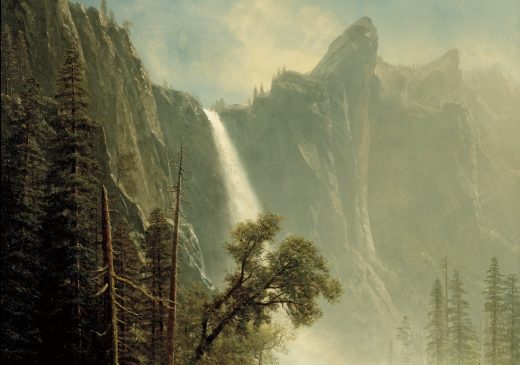
Bierstadt was an American artist who was born in Germany. He became famous for painting landscapes of the American West. He made oil sketches of the scenery during his visits to the Yosemite Valley. He later used the sketches as a reference for his paintings. His landscape paintings promoted the preservation of Yosemite as public parkland. His work also raised awareness of the need to protect the land and America’s natural beauty.
Albert Bierstadt (January 7, 1830 – February 18, 1902) was a German-American artist best known for his monumental landscapes that glorified the American West.
Bierstadt was born in Soligen, Germany and emigrated with his family to New Bedford, Massachusetts at age two. In 1853, Bierstadt traveled to Germany to study painting for several years in Düsseldorf. On his return, Bierstadt became part of the second generation of landscape artists associated with the Hudson River School in New York. Bierstadt's travels to Colorado and Wyoming territories in 1859 shifted his artistic focus to the American West. He joined geographical and geological surveys to document scenery. The grand, theatrical vistas he painted of the Rocky Mountains, Sierra Nevada, and Yosemite Valley brought acclaim and made Bierstadt a financial success, yet also drew criticism when tastes and perspectives shifted.