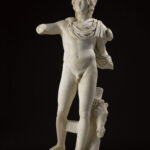
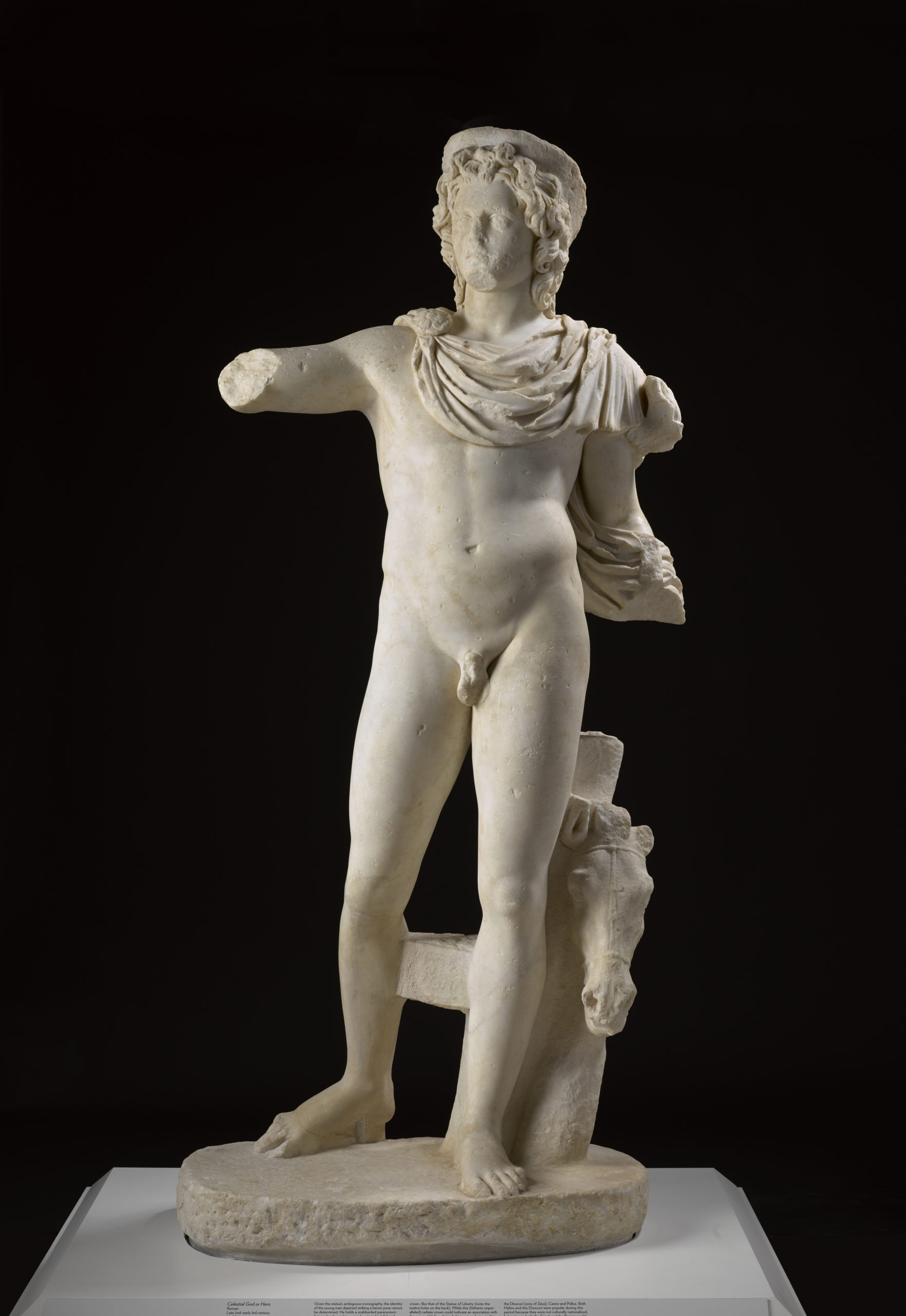
En la mitología griega, el dios celestial Helios era el responsable del movimiento del sol a través del cielo cada día, de este a oeste, mientras recorría los cielos en su carro dorado tirado por caballos. Se le suele representar como un joven coronado por el sol que conduce un carro guiado por cuatro caballos alados a través del cielo.
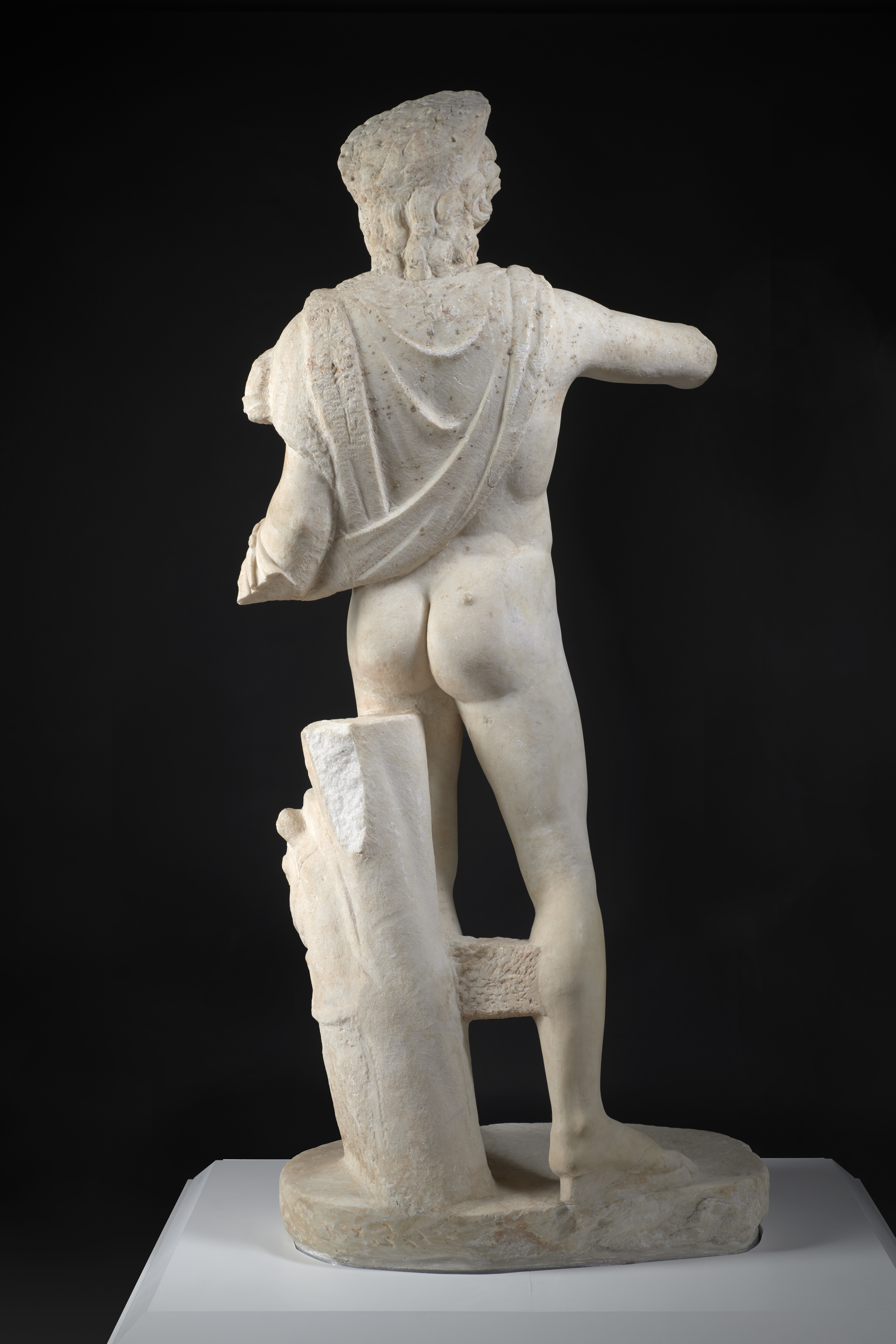
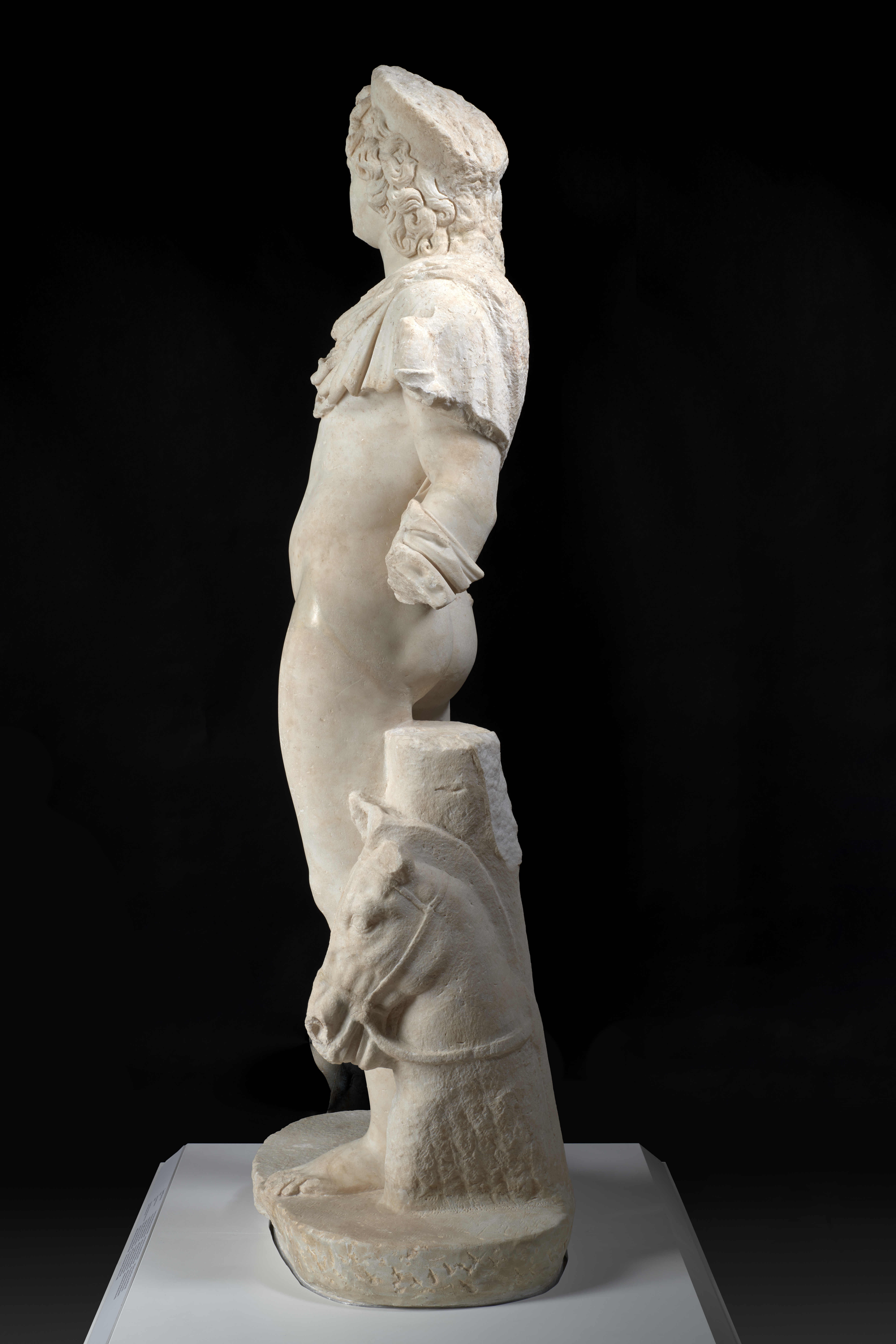
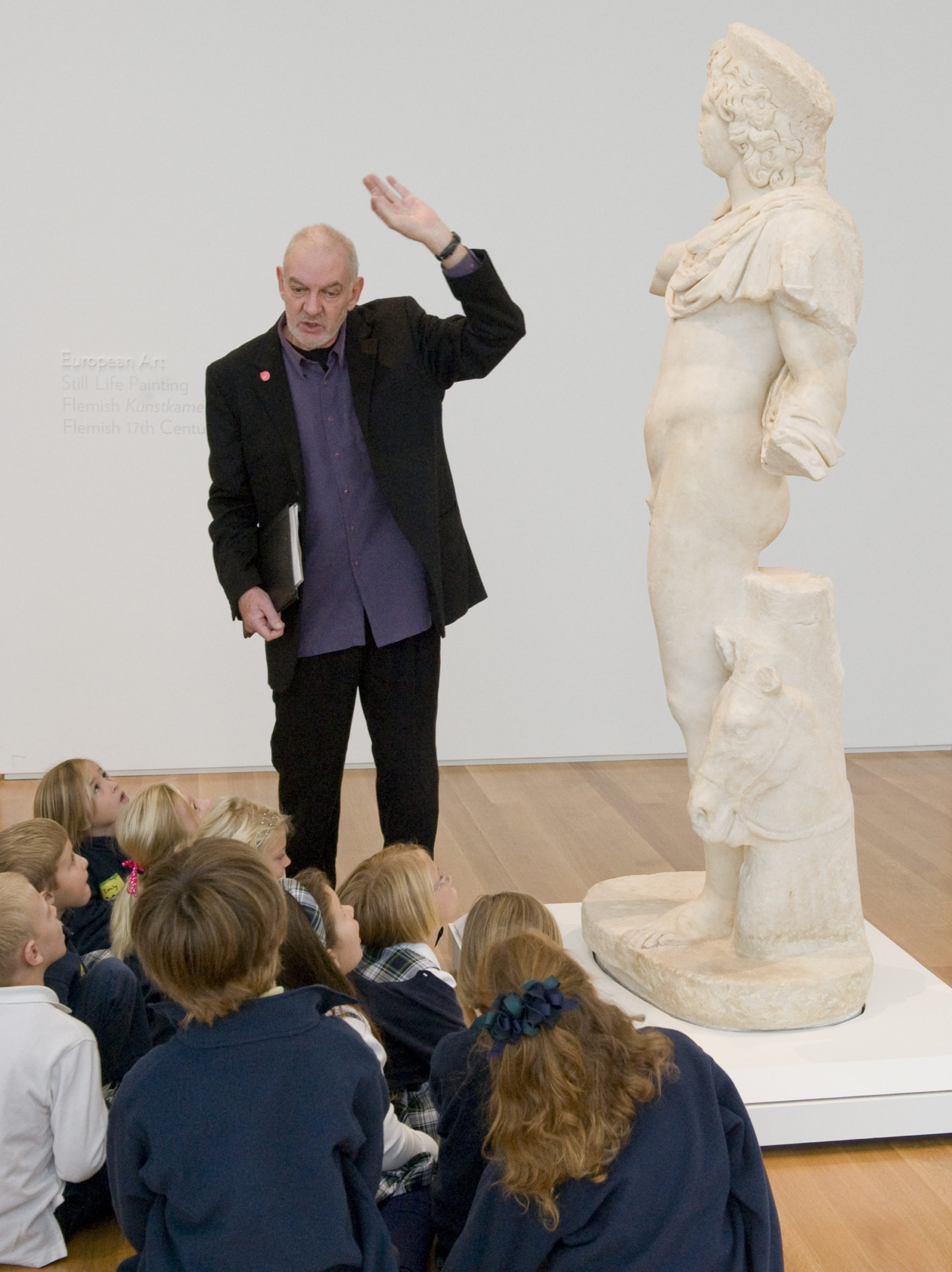
Esta estatua representa a Helios con los restos de una corona que originalmente tenía 12 rayos de bronce enmarcando su rostro. Los restos de una llama en el brazo izquierdo sugieren que en su día llevaba una antorcha en la mano izquierda. Otras pruebas sugieren que señalaba su ruta por el cielo con la mano derecha. Su carro tirado por caballos está representado por la figura de una cabeza de caballo junto a su pie izquierdo.
En el siglo IV, Alejandro Magno adoptó a Helios como su dios favorito, probablemente debido a que había conquistado Mesopotamia, Partia, Bactriana y el noroeste de la India (conocidas como las "tierras del sol naciente"). Le gustaba Helios como símbolo de poder y éxito militar. Alejandro Magno fue representado a veces en el arte (especialmente en esculturas de mármol) como Helios. Esta estatua de Helios, por ejemplo, presenta el distintivo peinado de Alejandro Magno.
tags: simbolismo, héroe, estudios sociales