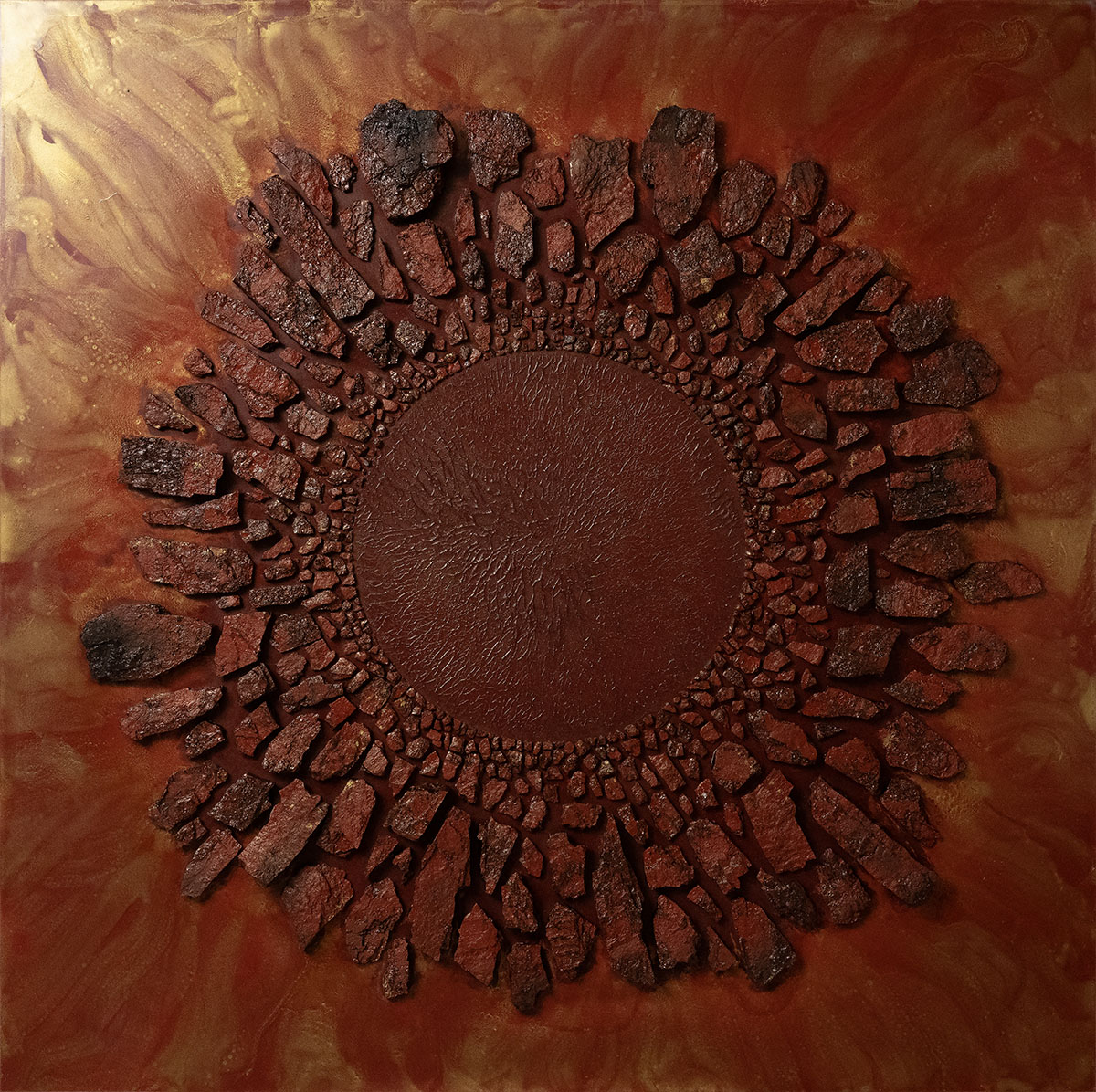
Acid Mine Drainage (AMD) pigments are made from water polluted by abandoned coal mines. When groundwater seeps into the mines, it becomes highly acidic. This acidic water then dissolves minerals that contain iron. The iron in the water creates dead zones in streams and wetlands. These are areas where no plants or animals can live. To create AMD pigments scientists collect and treat the polluted water. This process reduces the water’s acidity level. The iron that is extracted from the polluted water is used to create iron oxide pigments (like red ochre) that can be used as paint. The clean water is returned to the stream.
John Sabraw is an artist and a professor at Ohio University. He is also an activist and environmentalist. He creates paintings, drawings, and art installations that use sustainable materials. His artwork raises awareness about acid mine drainage and environmental issues. Sabraw worked with environmental engineer Guy Riefler to develop AMD pigments. These paints get their color from the iron that is removed from polluted waterways.
I turn pollution into paint.
John Sabraw
Sabraw partners with a company in Ohio called True Pigments. They transform pollution into colorful paints that can be used to create art. Artists are using these AMD-pigmented paints to add an environmentally conscious aspect to their work. AMD pigments are made from iron oxide that is chemically identical to red ochre. Red ochre is considered to be the world’s first red pigment. It is the earliest-known pigment used by our ancestors. For more than a million years, red ochre has been an important part of human communication and artistic expression. The only thing that has changed is how the red pigment is obtained.