Artista egipcio desconocido
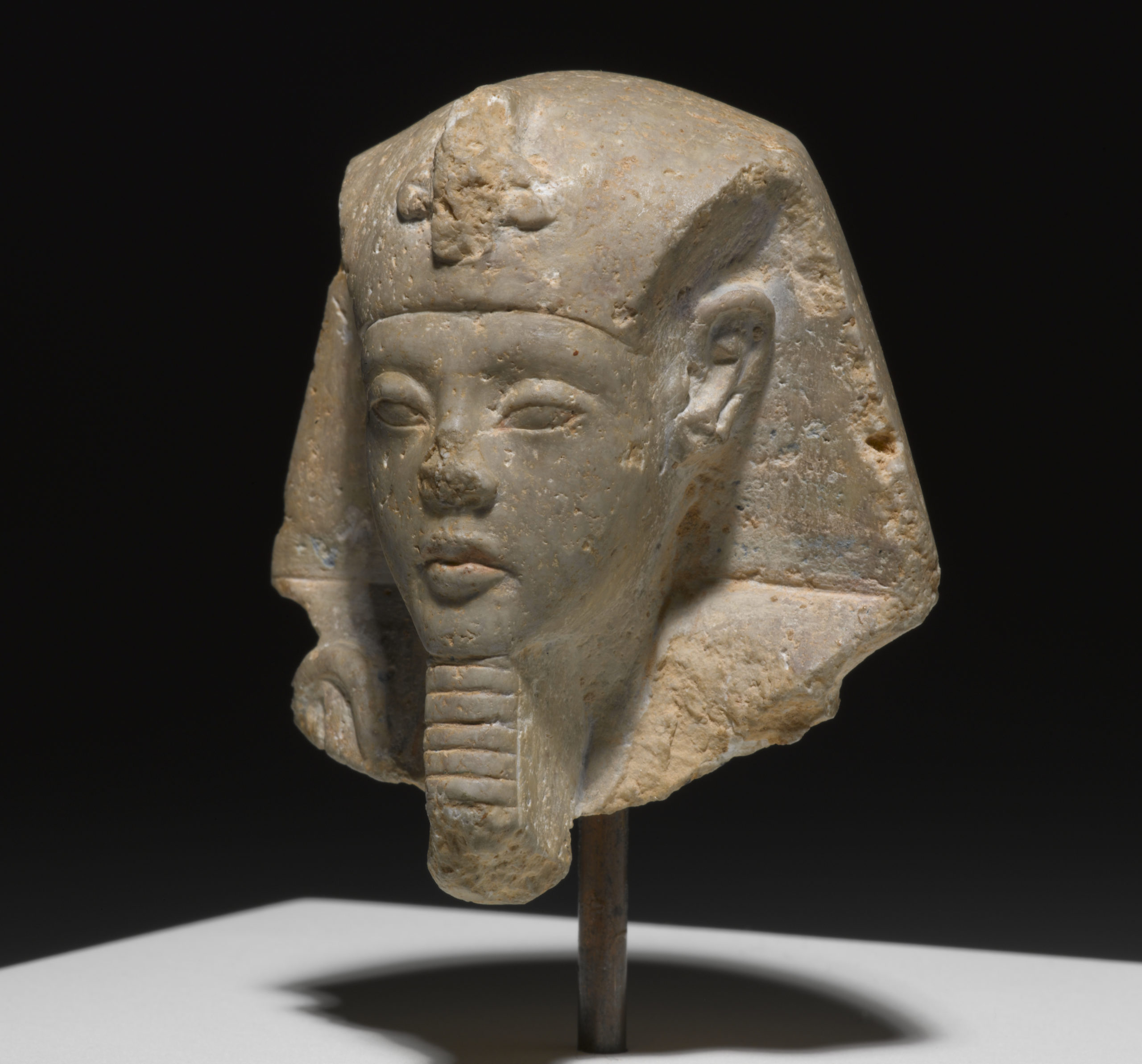
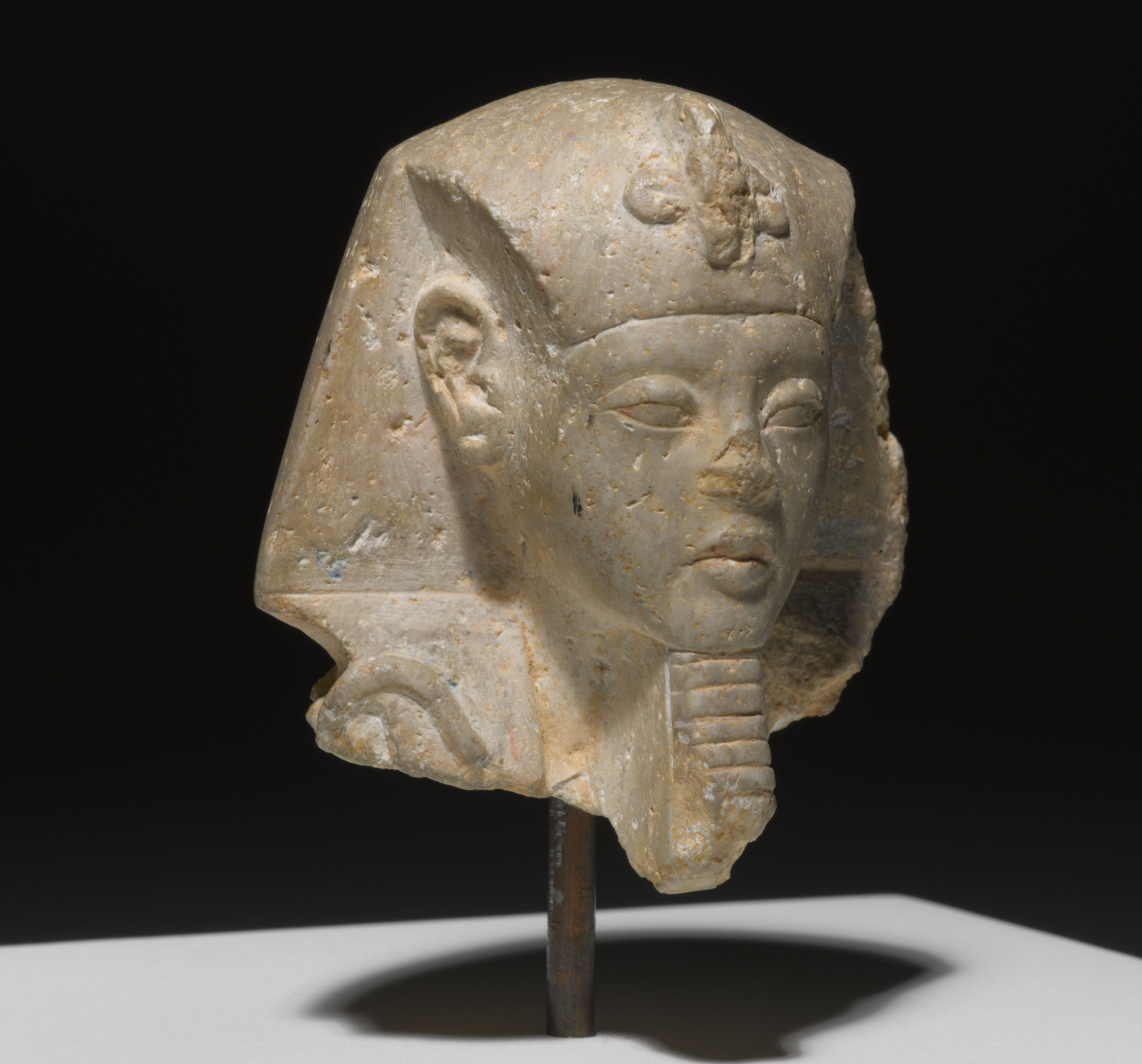
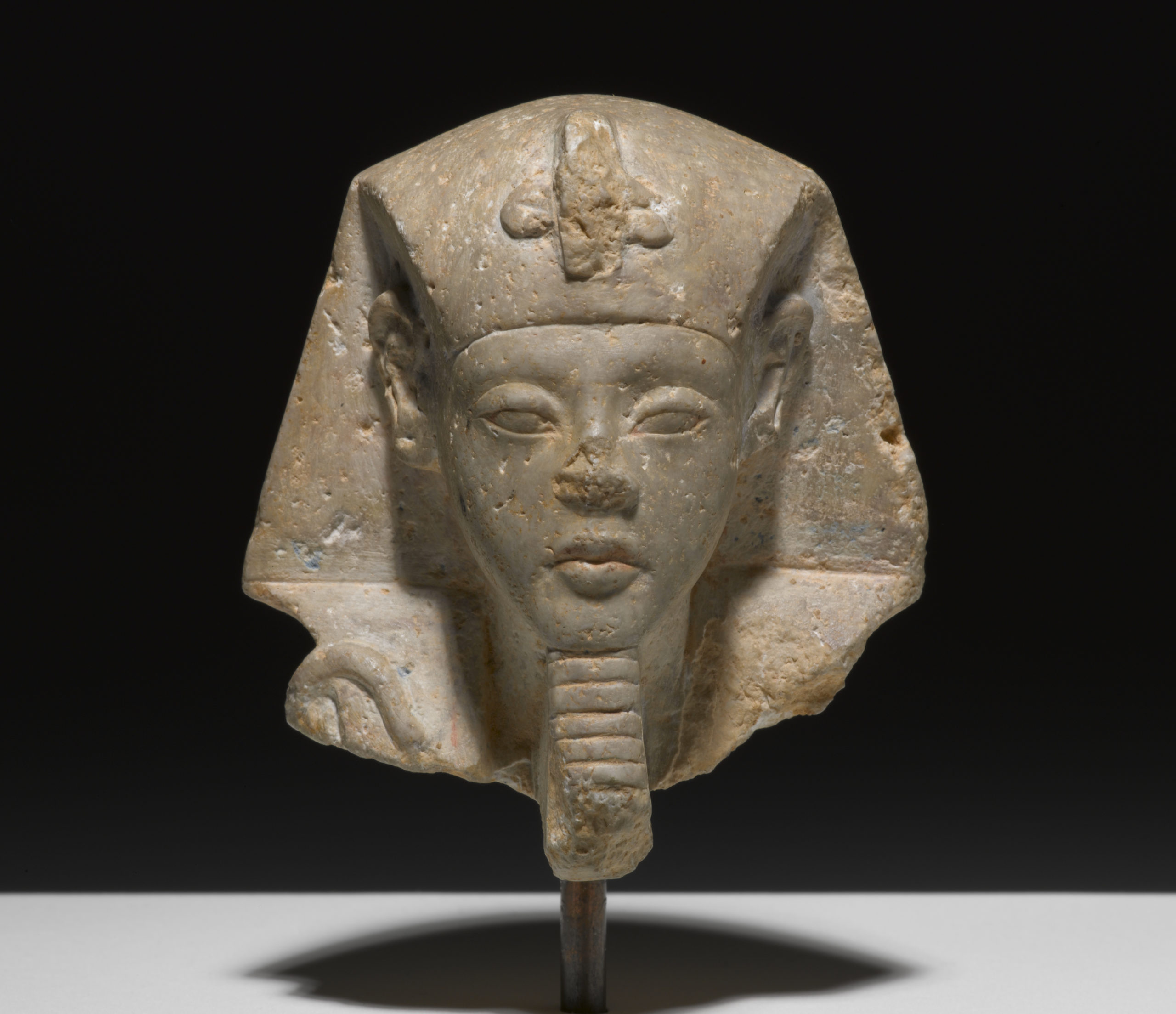
This head from a shabti was made for the tomb of the pharaoh Akhenaten (ah-ken-nah-ten). It wears a headdress featuring the Uraeus, a symbol of royalty that represents the goddess Wadjet. Pharaohs were often shown with a crook (a shepherd’s hook) and a flail (a tool used with grain), symbols that represent the god Osiris. The top of a crook is on the right shoulder.
A shabti is a small human figure, usually a mummiform (shaped like a mummy), that was placed inside a tomb. Shabtis were believed to serve magical purposes by performing manual labor for the deceased in the afterlife.
Akhenaten changed Egyptian religion from polytheistic (many gods and goddesses) to monotheistic, focusing on the sun god Aten. He created a new capital called Akhetaten (now an archaeological site called Amarna) and changed the style for depicting members of the royal family.
Despite this change, the existence of shabti fragments of Akhenaten shows that some funerary traditions and a belief in the afterlife persisted during his reign. Shabtis were connected to Osiris, a “banned” deity under Akhenaten’s rule, yet they were still used for Akhenaten’s burial.
It is believed that Akhenaten was the father of Tutankhamen, called “King Tut” in popular culture. King Tut rejected Akhenaten’s religious beliefs. During his reign he changed Egyptian religious traditions back to what they were before Akhenaten came into power.
En el sexto año de su reinado, Akenatón impuso cambios drásticos en la religión que se había practicado durante siglos en el antiguo Egipto. Cambió el culto a muchos dioses y diosas por el culto a un único dios del sol llamado Atón, y exigió a todos los egipcios que practicaran esta nueva religión. Akenatón amuebló su tumba en el-Amarna de forma tradicional, con sencillez y sin referencias a Osiris y otras deidades funerarias. Se prepararon al menos 200 shabtis para su entierro, pero ninguno de ellos se ha encontrado completamente intacto. Tras el reinado de Akenatón, el rey Tut volvió a cambiar la religión de Egipto por el culto tradicional a muchas deidades. Los que gobernaron Egipto después de Akenatón hicieron desmontar sus monumentos, para reutilizar los materiales de construcción y borrar su memoria. También se destruyeron los relieves de Akenatón y las inscripciones que lo honraban.
Donación del James G. Hanes Memorial Fund
circa 1352 to 1336 B.C.E.
3 1/8 x 2 7/8 x 2 1/4 pulgadas (7,9 x 7,3 x 5,7 centímetros)