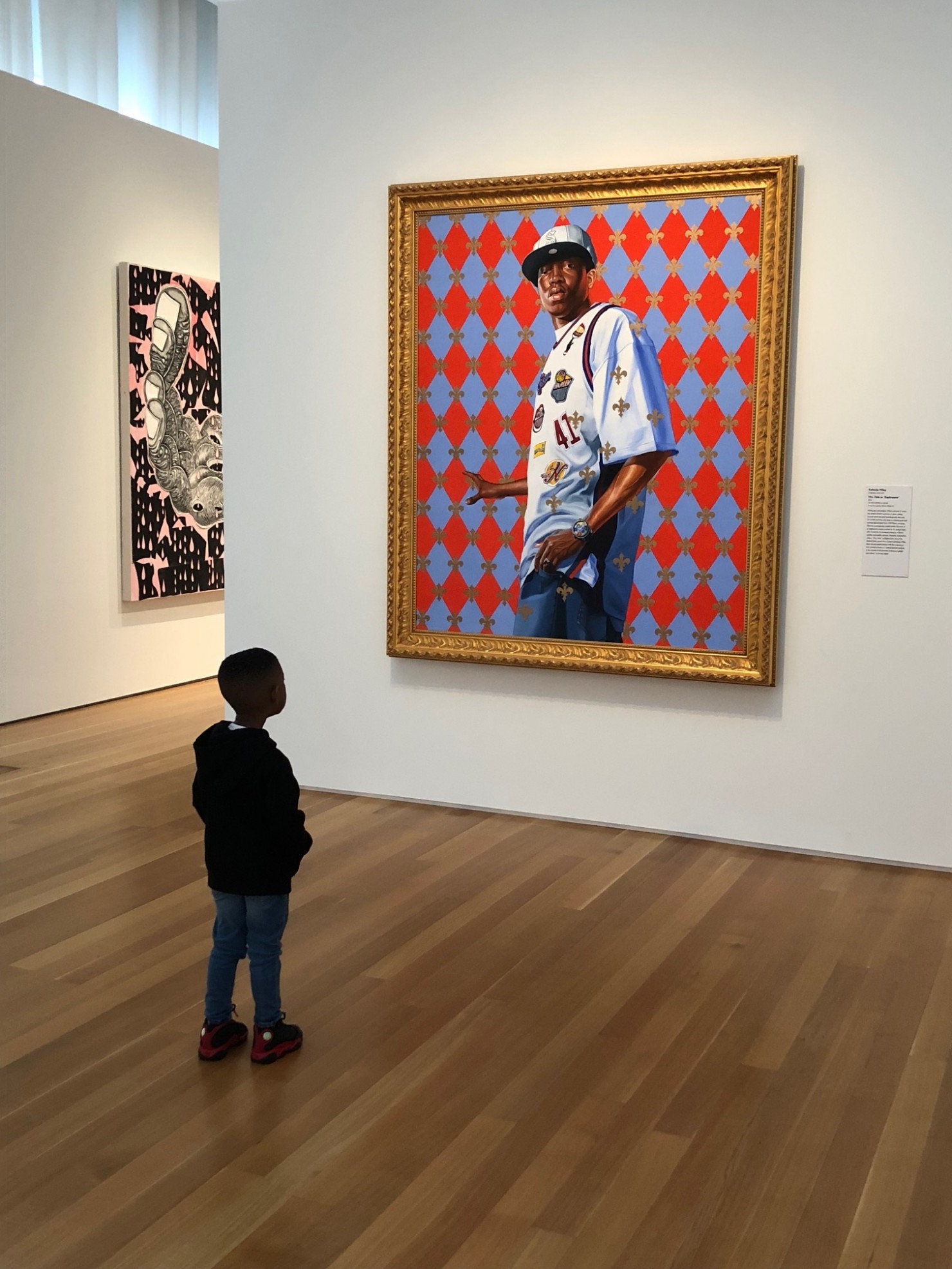
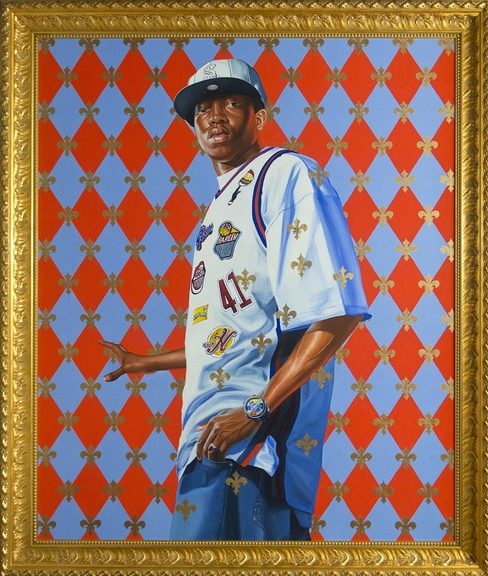
In Mrs. Hale as Euphrosyne, Kehinde Wiley references an 18th-century painting by Sir Joshua Reynolds by the same name. Reynolds’s painting depicts Mary Hale (daughter of William Chaloner III) as the goddess Euphrosyne (one of the Three Graces in Greek mythology). The Three Graces were the daughters of Zeus and were believed to represent “ideal” beauty.
In Wiley’s version of the painting, Mrs. Hale is represented by a young Black man wearing a Harlem Globetrotters jersey and a Chicago White Sox hat. The background is a red-and-blue diamond pattern with golden fleurs-de-lis designs. Wiley’s painting does not depict the original painting’s story or its female subject. The connection between the two paintings is the way in which the subject is posed.
Wiley’s “urban-meets-classical” style of painting reimagines the Western European portraits that were once reserved for people of great wealth and power. His work calls attention to the historical lack of representation of people of color in the art world. In his portraits he explores the language of power, racial and gender identity and inequity, and society’s ideals of beauty. Wiley’s portraits were originally based on people he met on the streets in Harlem. He has since painted portraits of many influential Black artists, including Mickalene Thomas, Nick Cave, and Yinka Shonibare. In 2018 Wiley was selected to paint Barack Obama’s presidential portrait.