Entre los tipos de objetos judaicos más importantes se encuentra el escudo de la Torá (Tas en hebreo). En la tradición asquenazí (Europa central y oriental), el escudo de la Torá forma parte de un conjunto decorativo que cubre el rollo de la Torá cuando no se utiliza. Los escudos de la Torá suelen tener una función tanto práctica como decorativa. Se basan en corazas similares que llevaban los antiguos sumos sacerdotes en el Templo de Jerusalén.
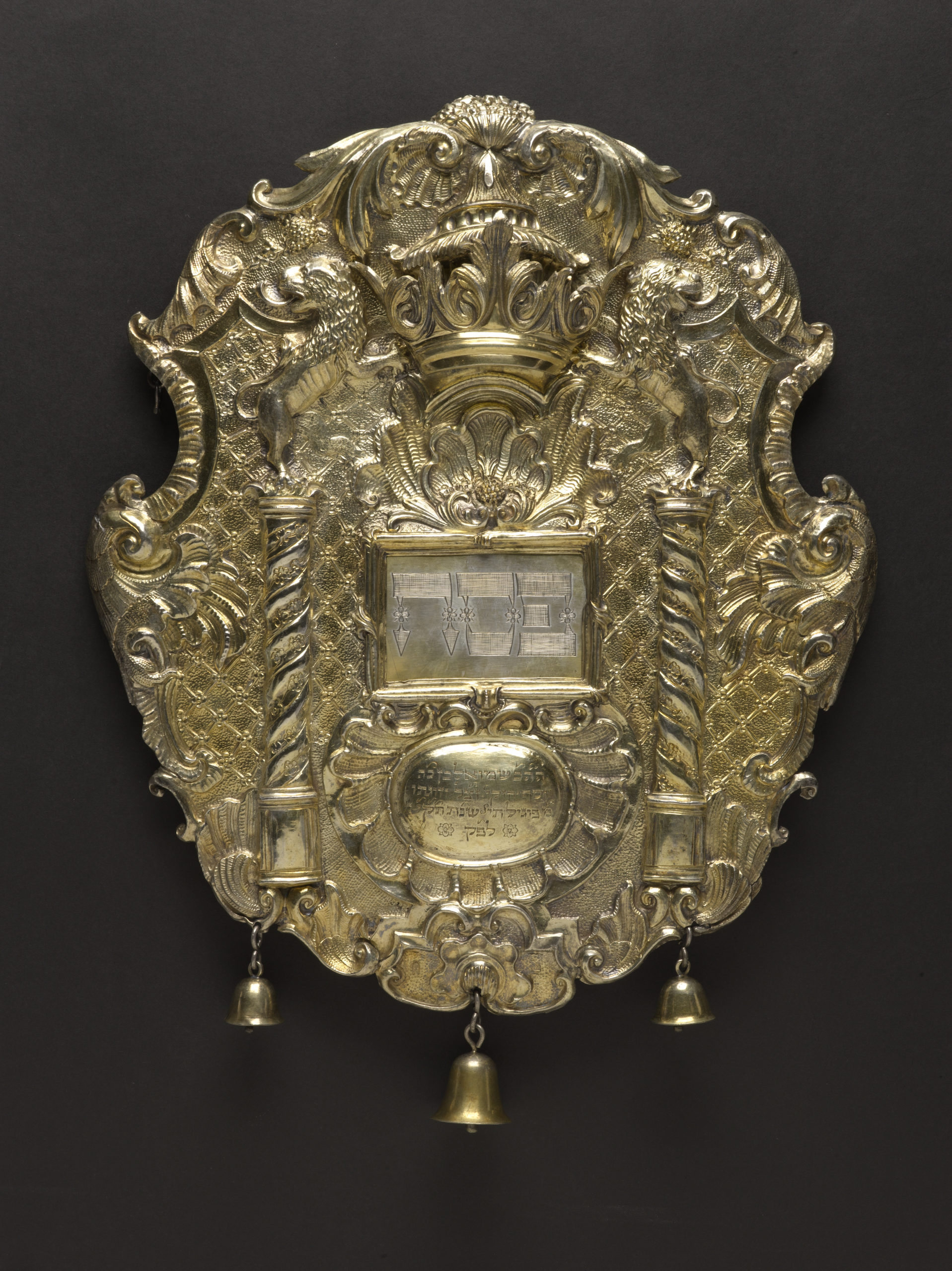
The Torah shield is hung by a chain from the protruding staves (handles) of the draped Torah scroll. Usually made of silver or silver gilt, the shield often features symbolic references to the majesty and authority of the word of God. In this example the “Crown of the Law (Torah)” is on top of the central plaque that represents the Torah reading. Originally the shield had other plaques (pieces that could be inserted into the rectangular and oval frames) that were changed to mark a particular holiday. The only surviving plaque notes Pesach (Passover) on one side and Sabbath on the other. On either side of the plaque, there are twin columns representing the pillars (Jachin and Boaz) that stood on either side of the entrance to Solomon’s Temple (1 Kings 7:13–22, 41–42). The “lions of Judah” stand on top of each column, symbolizing strength and the Jewish people.
La ciudad y las marcas del fabricante están estampadas en la superficie, cerca de la parte inferior del escudo. A pyro piña, identifica la ciudad de Augsburgo, uno de los centros de las artes metálicas europeas en los años 1600 y 1700. La letra H indica el año (1747).
The initials “HM” identify the maker as Hieronymus Mittnacht, a prominent Augsburg silversmith who specialized in Judaica. With its dense and swirling ornament, this shield is a masterpiece of ornamental design known as rococo during the 1700s. The shield was originally commissioned for a Bavarian village synagogue. The cartouche (a carved drawing representing a scroll with rolled-up ends) at the bottom includes the original Hebrew dedication by “the esteemed Kohen (priest) Samuel Joseph Ezekiel, of blessed memory, and his wife Feygl, may she remain among the living, in the year [5]509 [1749].” The central plaque indicates the Torah reading for Passover.