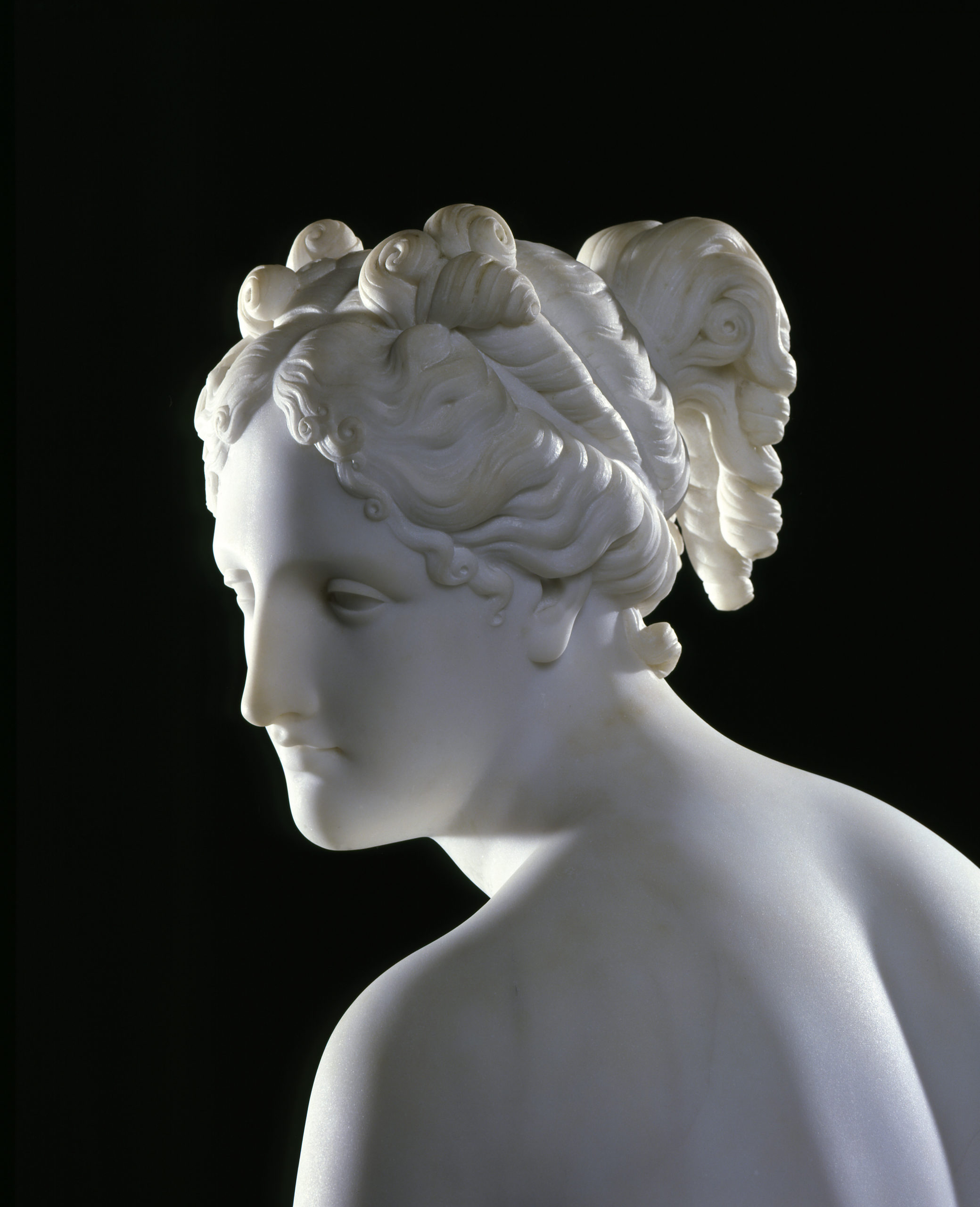
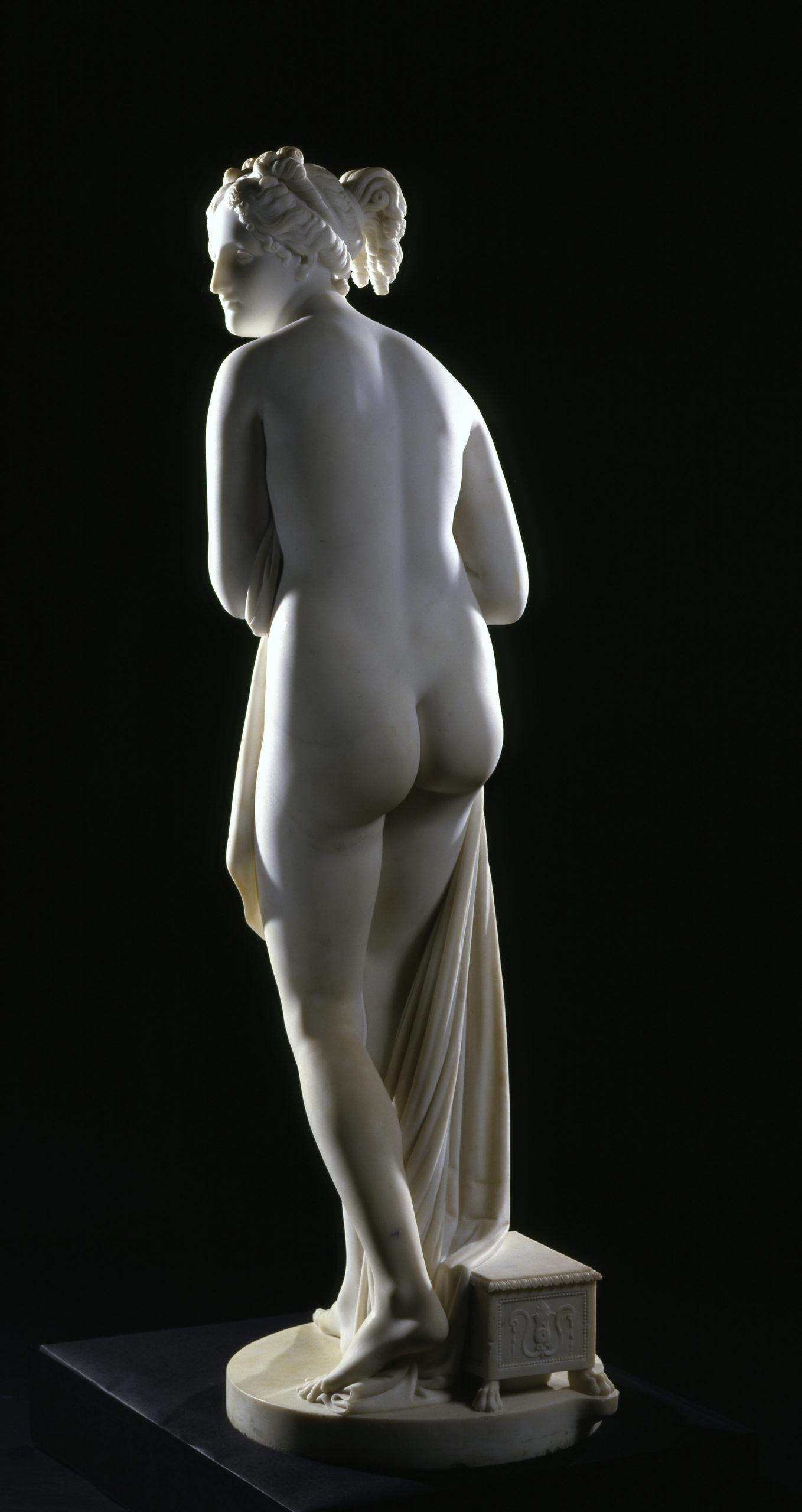
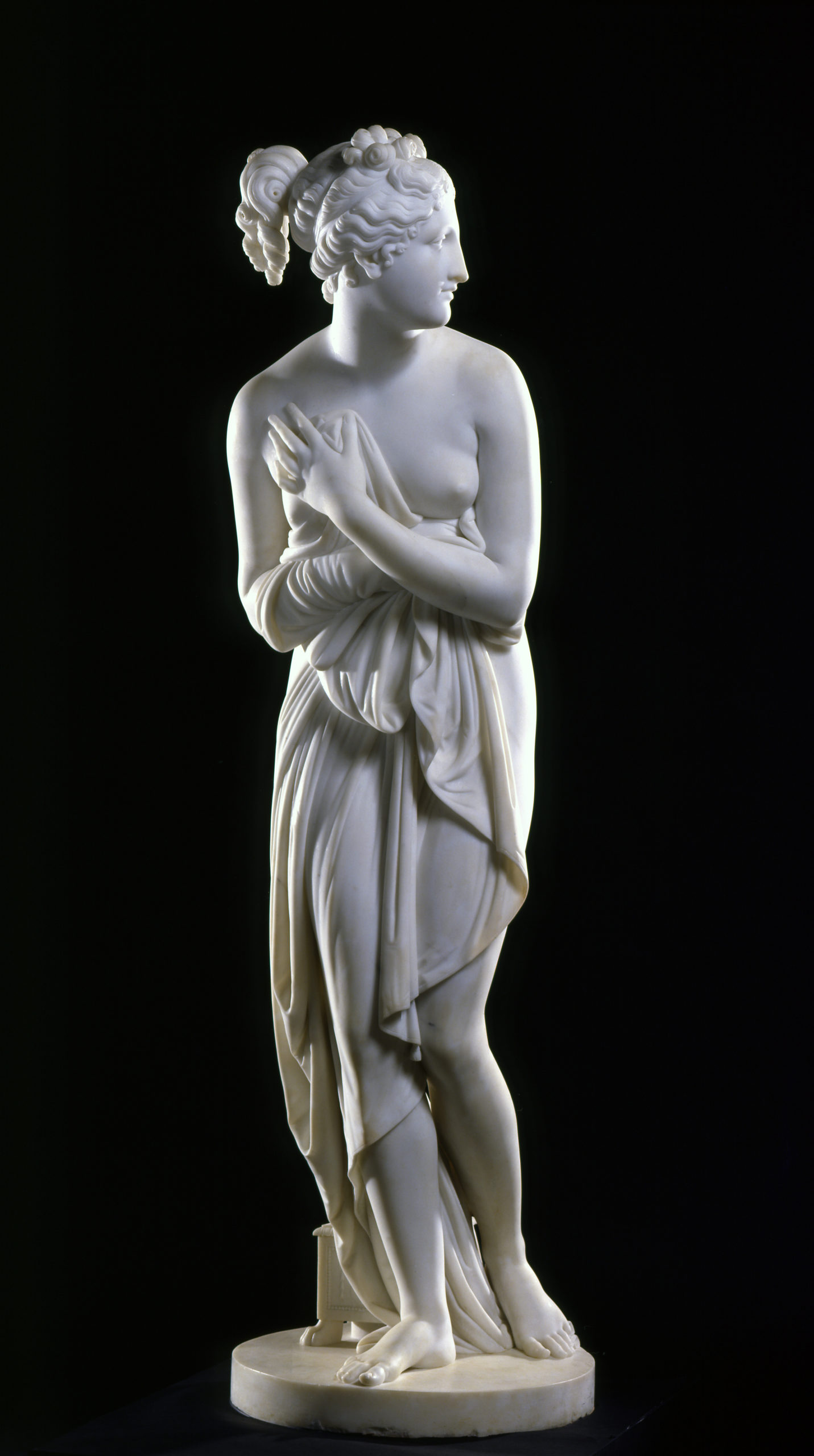
This sculpture of the Roman goddess of love is a replica of the original. In both ancient and modern times, Venus symbolizes fertility, sex, love, and imperial power. This marble statue of Venus is neoclassical in style. Neoclassicism was a cultural movement in the 18th and 19th centuries. Art and architecture inspired by ancient Greece and Rome became popular during this time period.
Italian sculptor Antonio Canova brought neoclassical style to the art of sculpture. He was commissioned, or hired, to create the Venus Italica (Italian Venus). It was intended to replace an ancient Greek statue (the Medici Venus) that Napoleon seized and took to France in 1802.
Canova did not sculpt this replica. It was made by his workshop assistants after he created the original sculpture. Many successful artists during Canova’s time had assistants who helped them complete their commissions. Sometimes (as in this case) the assistants created the work without the artist’s help.
This copy of Canova’s marble Venus was instantly successful. At least four copies of the sculpture were made before the artist’s death. The original version of the Venus Italica is housed in the Pitti Palace in Florence, Italy.