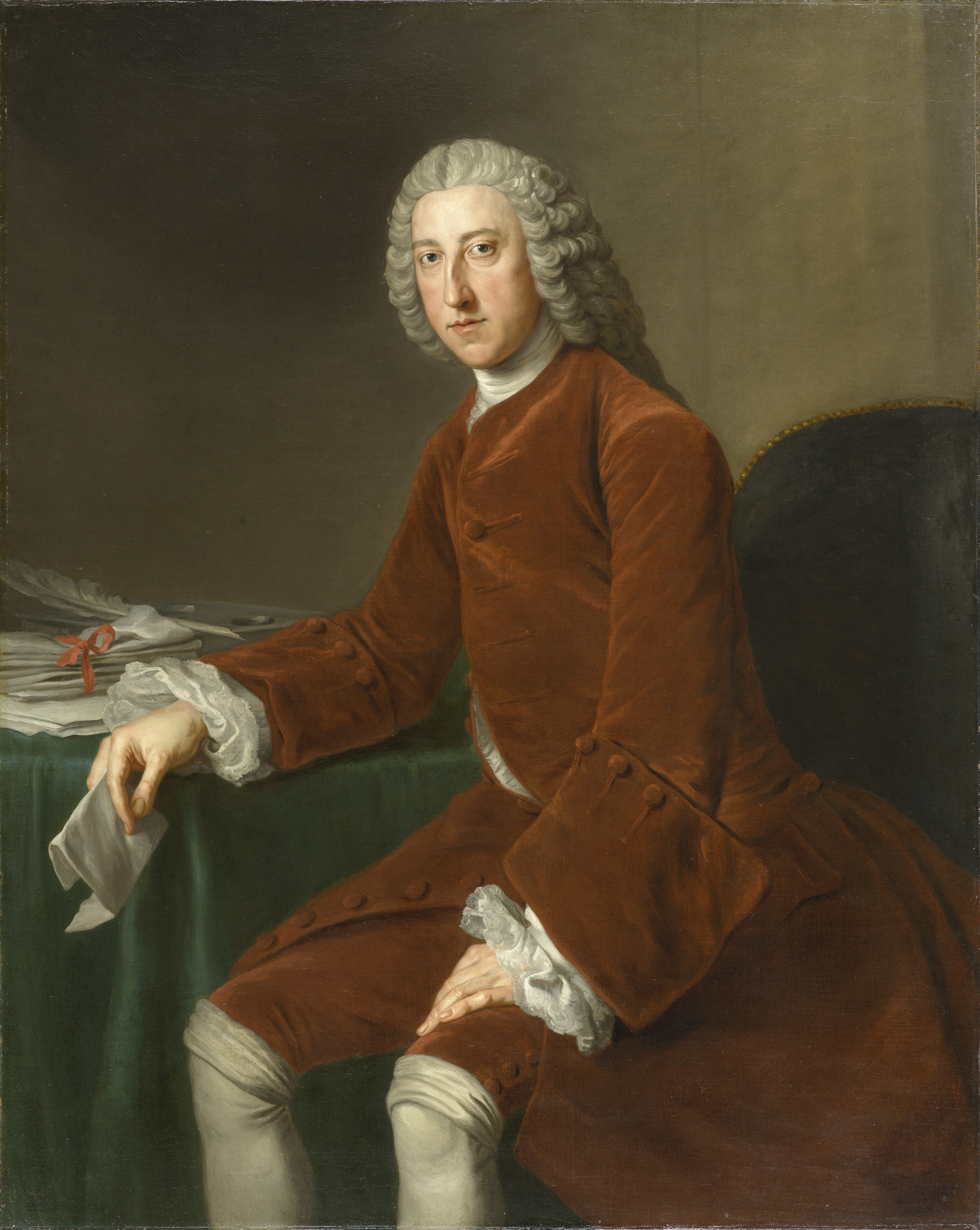
William Pitt the Elder (1708–1778) was one of Britain’s most skilled political leaders. He led the British government for only five years, but he made a lasting impact. During the Seven Years’ War, he helped plan Britain’s strategy. His clear thinking and practical decisions helped Britain defeat France in North America and India. These victories expanded Britain’s power and helped it grow into a global empire.
Pitt also supported the American colonists. In 1766 he spoke out against the Stamp Act, a tax that upset many people. Later, as tensions grew, he urged Britain to stay calm and avoid harsh punishment. He did not support full independence, but he believed a peaceful solution was best. Pitt is still remembered today, including in North Carolina, where Pitt County is named after him.
Willam Hoare, often called “Hoare of Bath,” was one of the most famous portrait painters in 18th-century England. He worked in the popular spa town of Bath, painting portraits of wealthy visitors, political leaders, and local figures. Hoare was known for both his detailed oil portraits and soft pastel portraits. His work was inspired by Italian artist Rosalba Carriera, who painted in the rococo style. Like Carriera, Hoare used loose brushstrokes to create a soft, flowing look, and he posed his subjects to look natural and relaxed. Their calm, serious expressions help show their unique personalities.
One of Hoare’s most famous paintings is a portrait of Ayuba Suleiman Diallo, which shows a formerly enslaved African man with dignity and respect. Hoare also helped start the Royal Academy of Arts, making him an important figure in British art history.
tags: change, identity, impact, place, portrait, US History