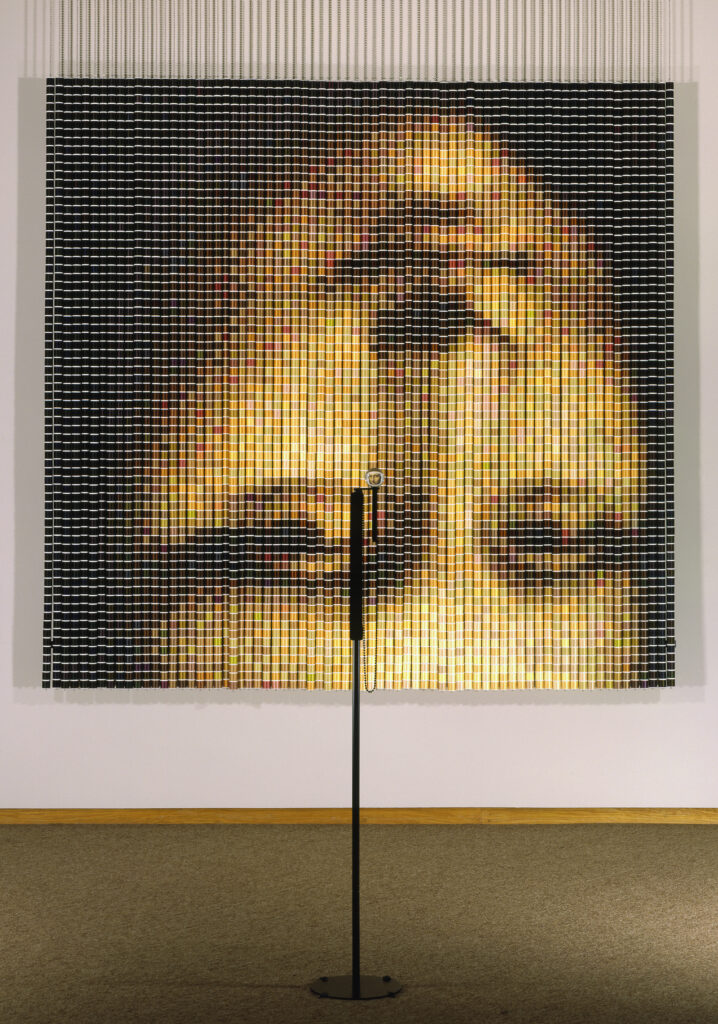
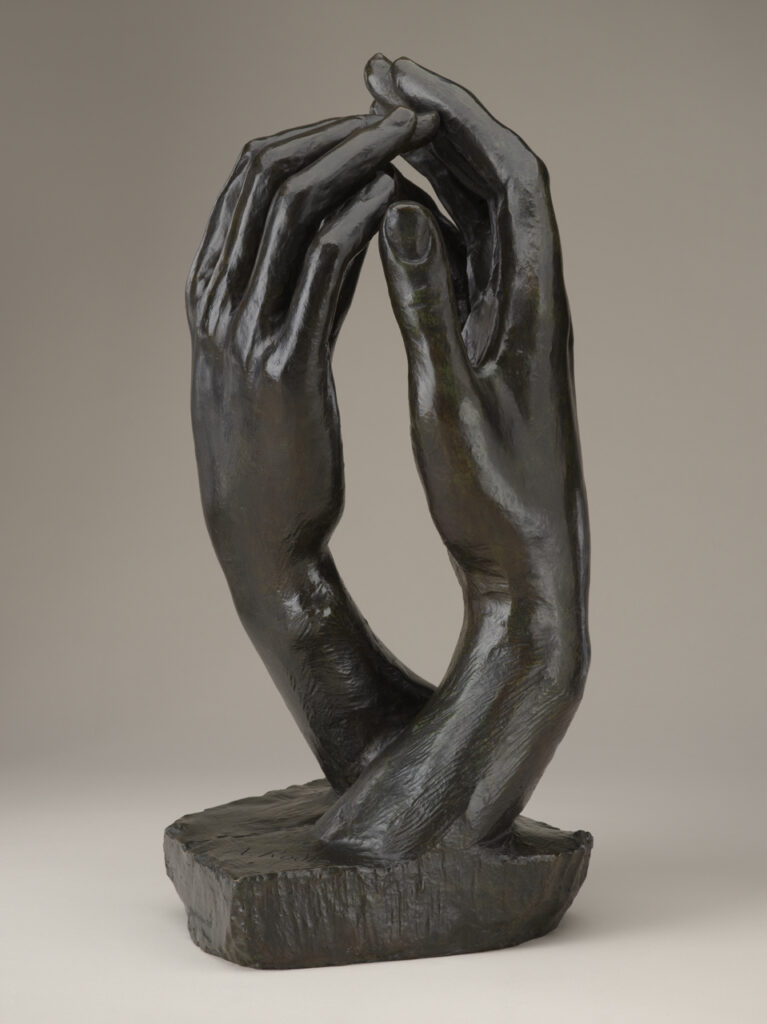
- Students view various works of art from the Museum that are examples of the transformations (PowerPoint). For each work of art, teacher asks the following:
- What do you see?
- What does this work of art make you wonder?
Teacher then asks students if the work of art contains an example of slide, flip, or turn, as directed in the PowerPoint presentation. After the presentation, the teacher reviews the elements of art and principles of design and asks the following:
- How have the artists applied the principles of design in these works of art?
- Why might the artists have created works of art that feature symmetry?
- What might the artists need to know about math to create these works of art?
- How might you use the principles of design in creating your own work of art that features slide, flip, or turn?
- Students are given a description of the project and examples (PowerPoint).
- Students find the center of their graph paper and create a coordinate plane.
- Students draw a diagonal line through quadrants to form an X.
- Students plan then construct their design in one half of one quadrant then transform the design to the other half.
- Students replicate the design to the other quadrants.
- Students color the design using a symmetrical color scheme.
- Students record the original coordinates of at least five shapes, describe the transformation, and then record the new coordinates of the figures.
- Students complete a self-assessment of their work using a rubric.
- Teacher assesses the work using a rubric for the teacher.
Written by Tonya Buff Scott
Vocabulary
coordinate planeordered pairx-coordinatey-coordinatequadrantsymmetrytransformationtranslation (slide)rotation (turn)reflection (flip)
Materials
Links
Elements of Art and Principles of Design