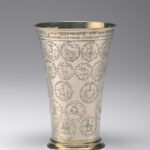
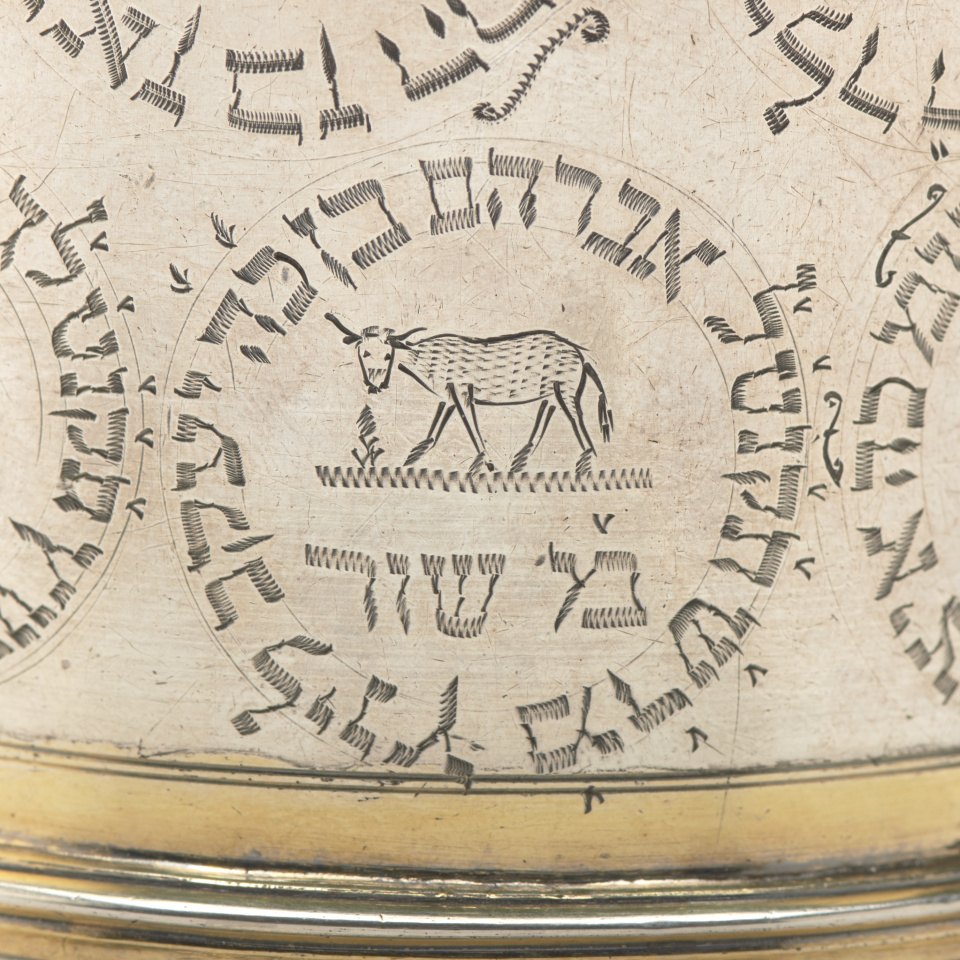
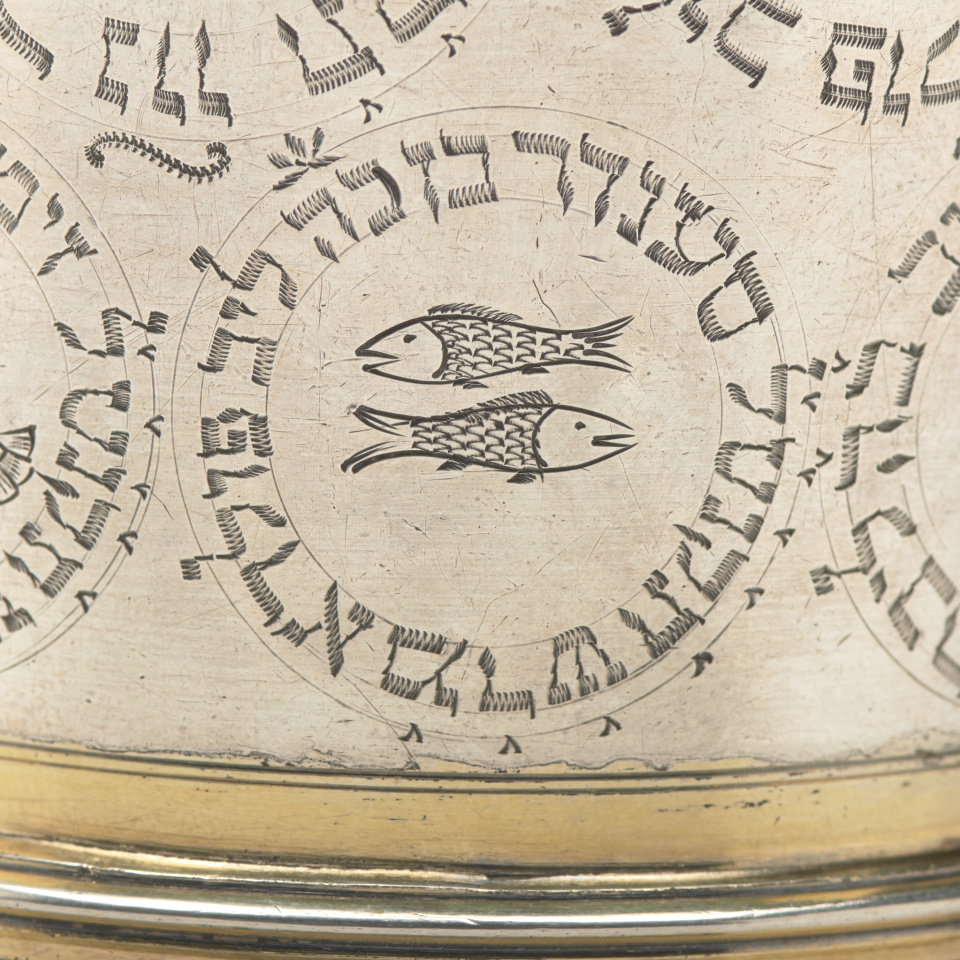
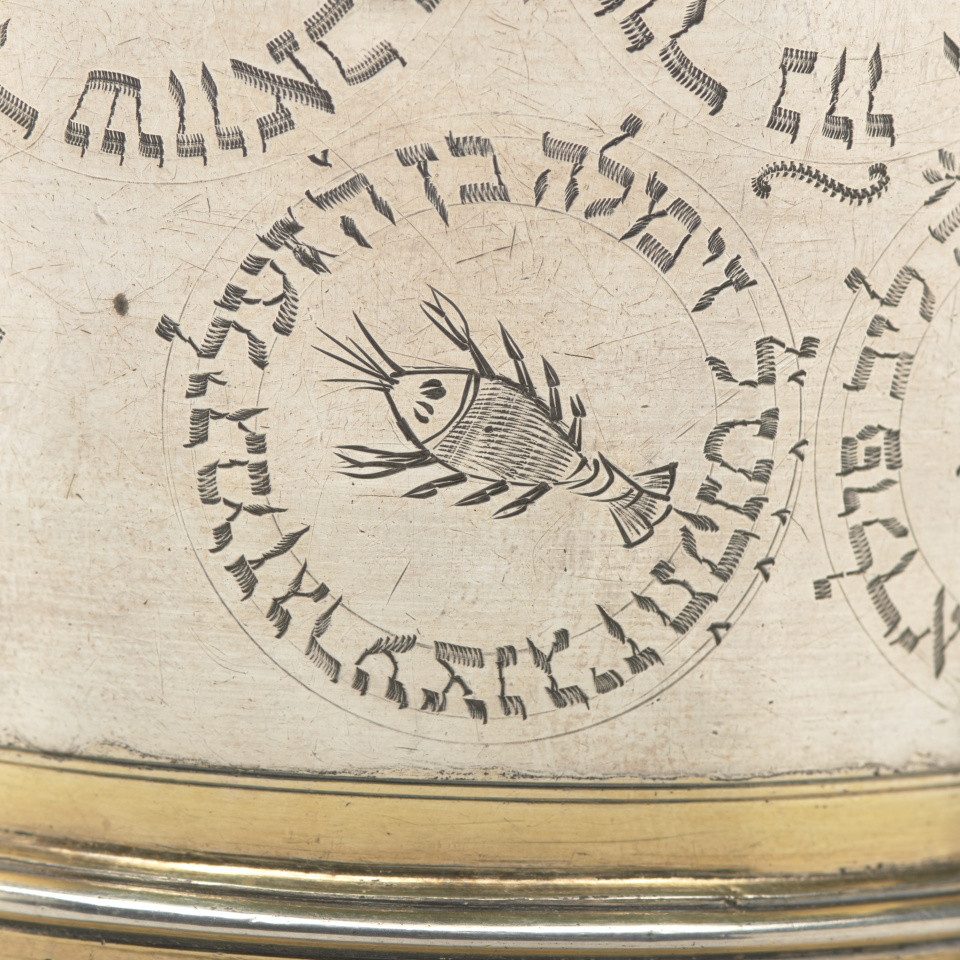
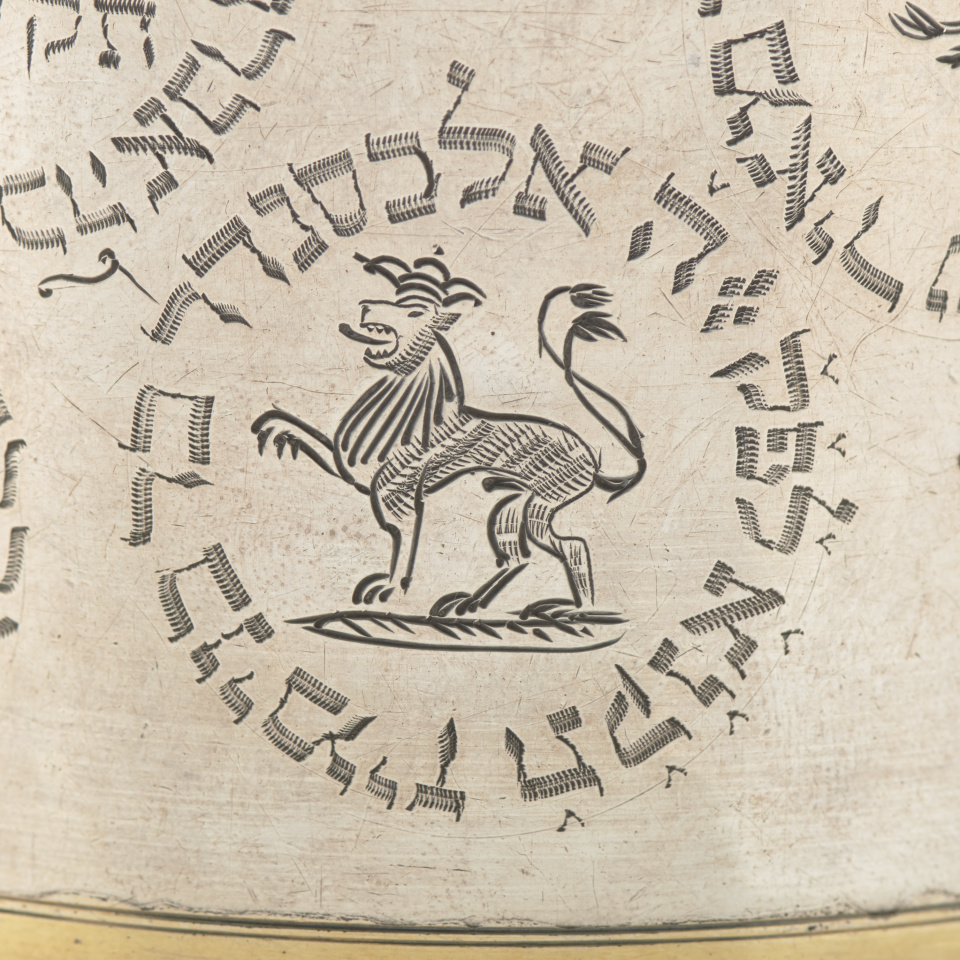
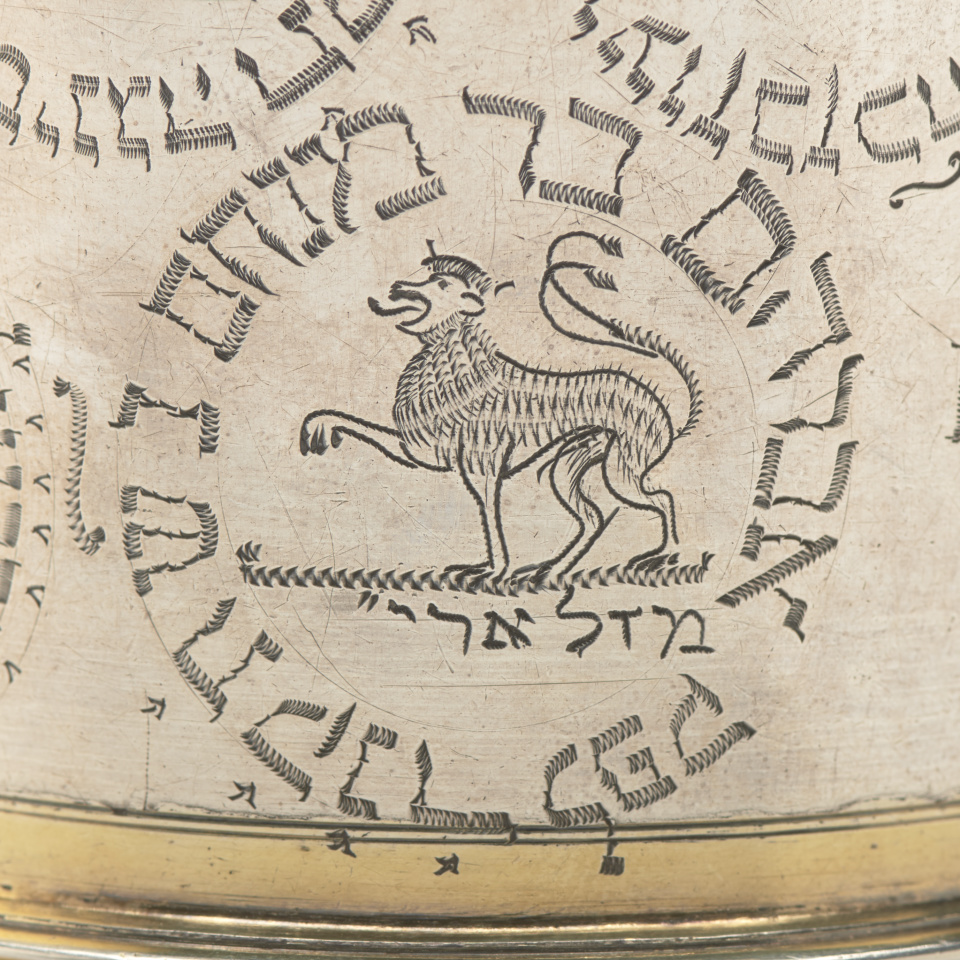
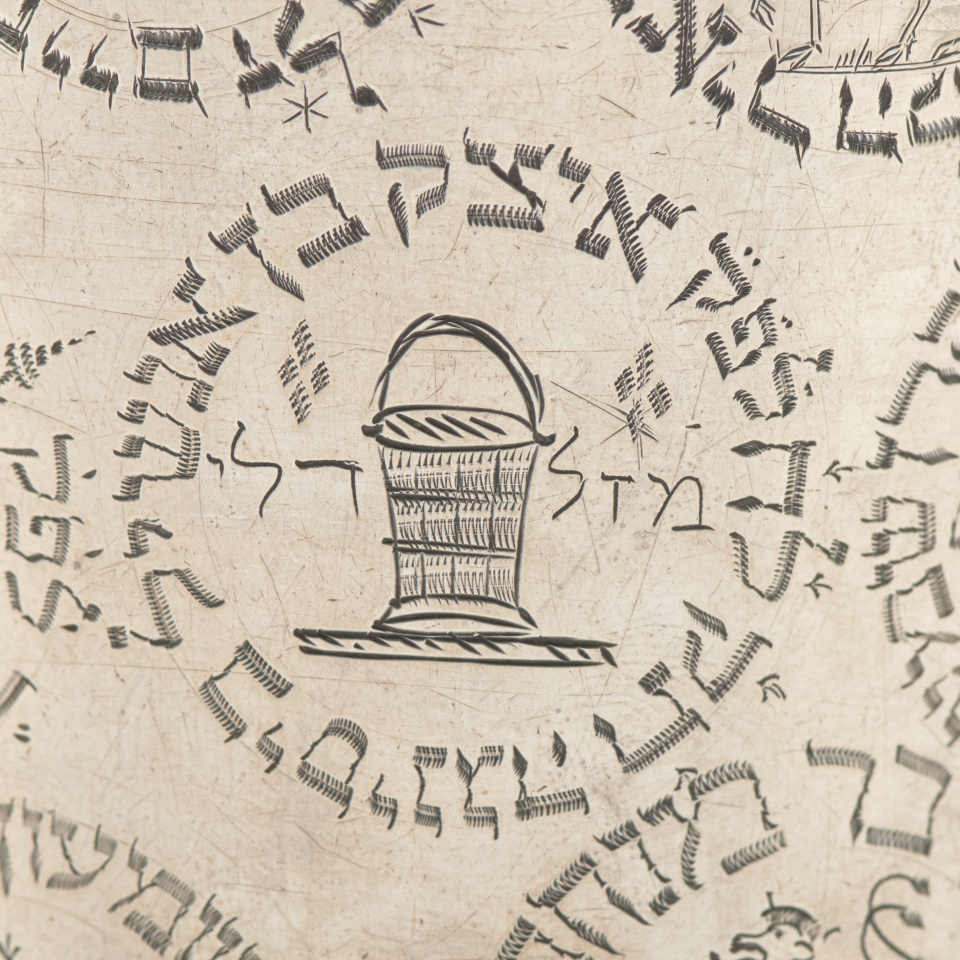
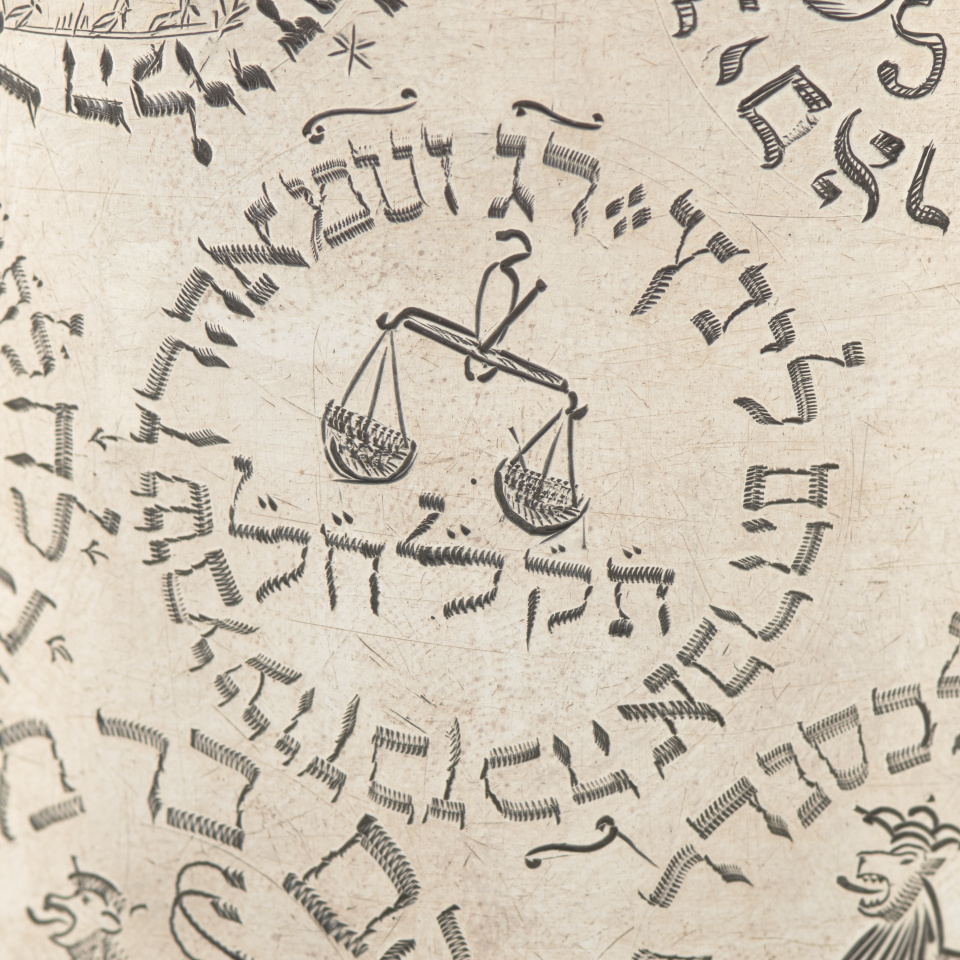
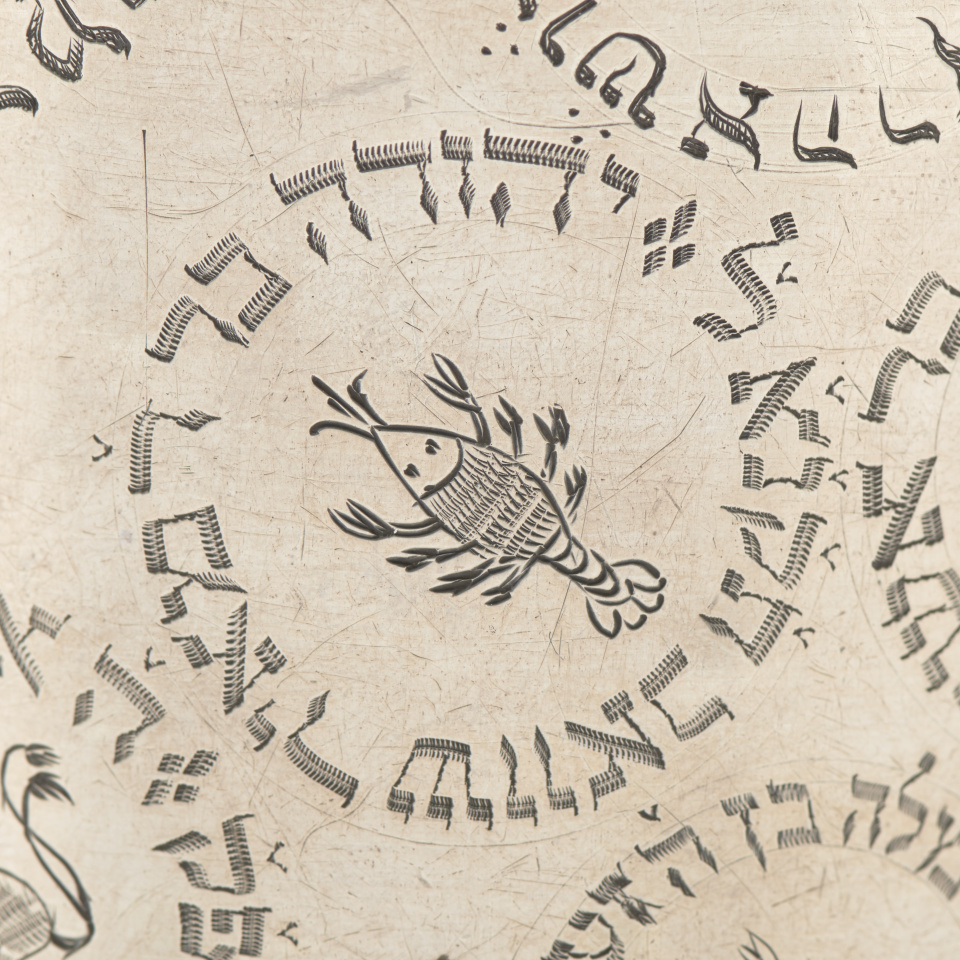
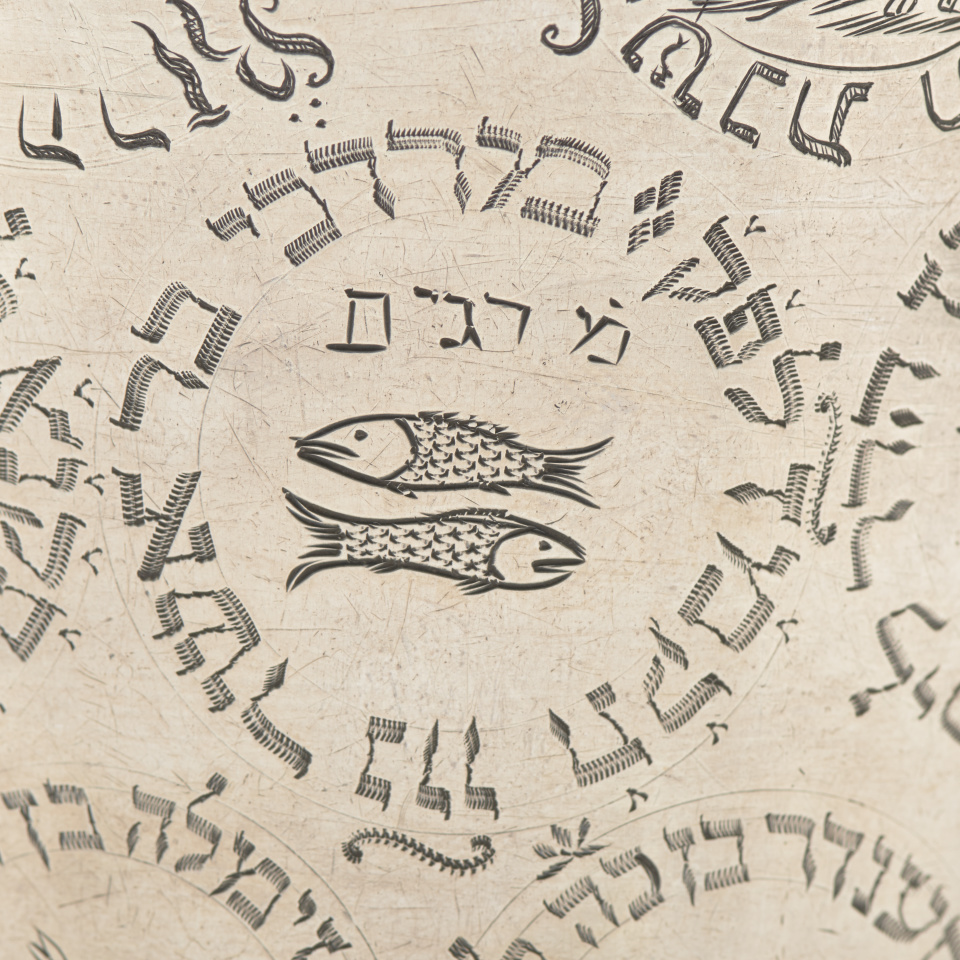
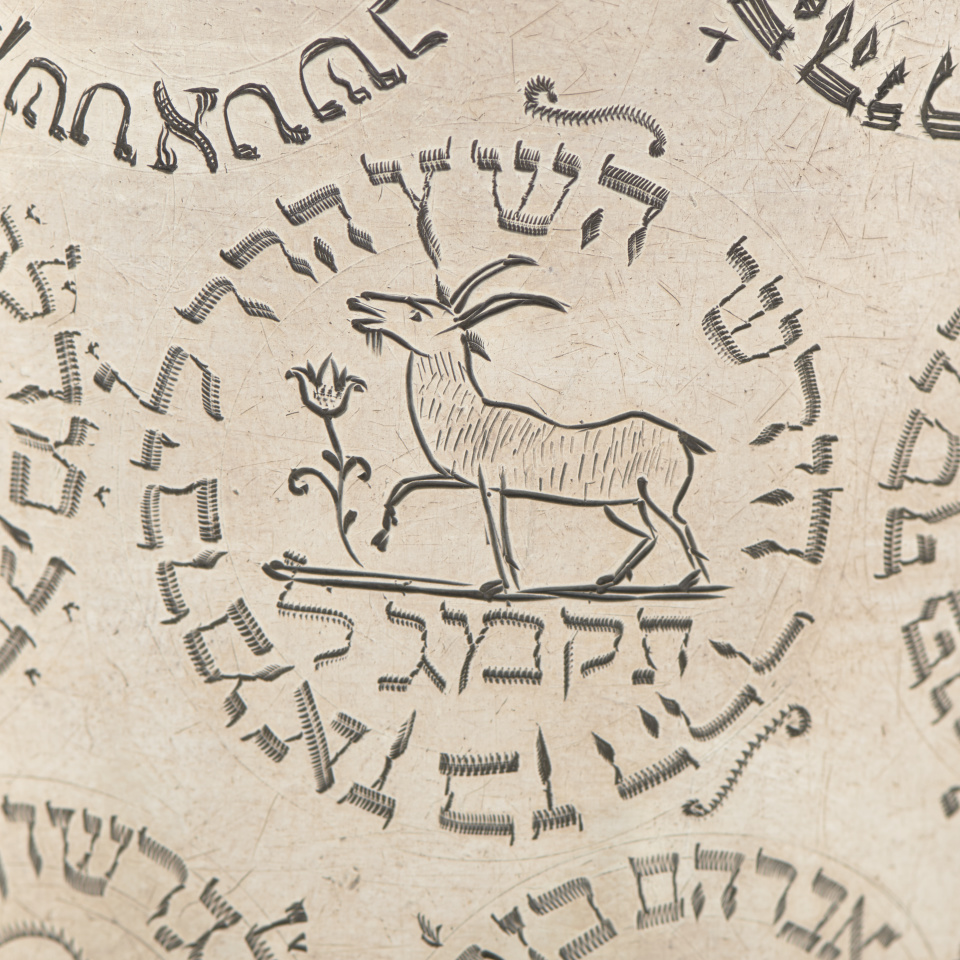
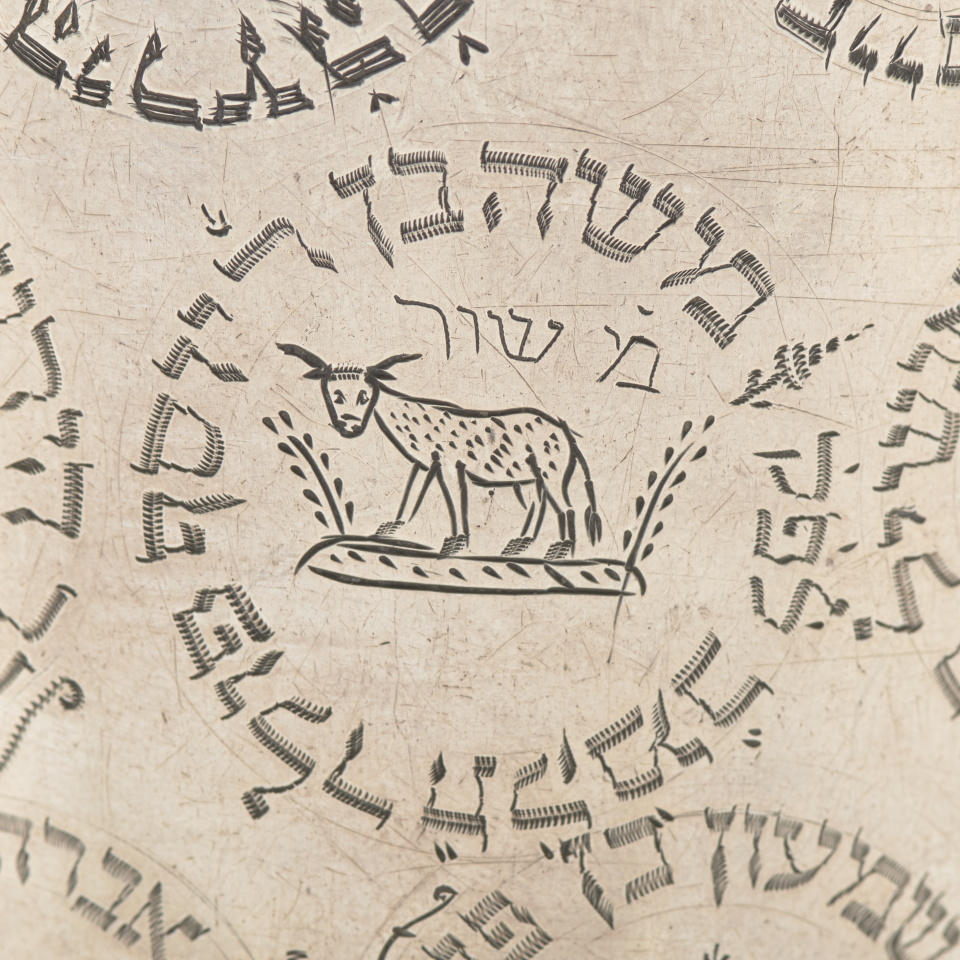
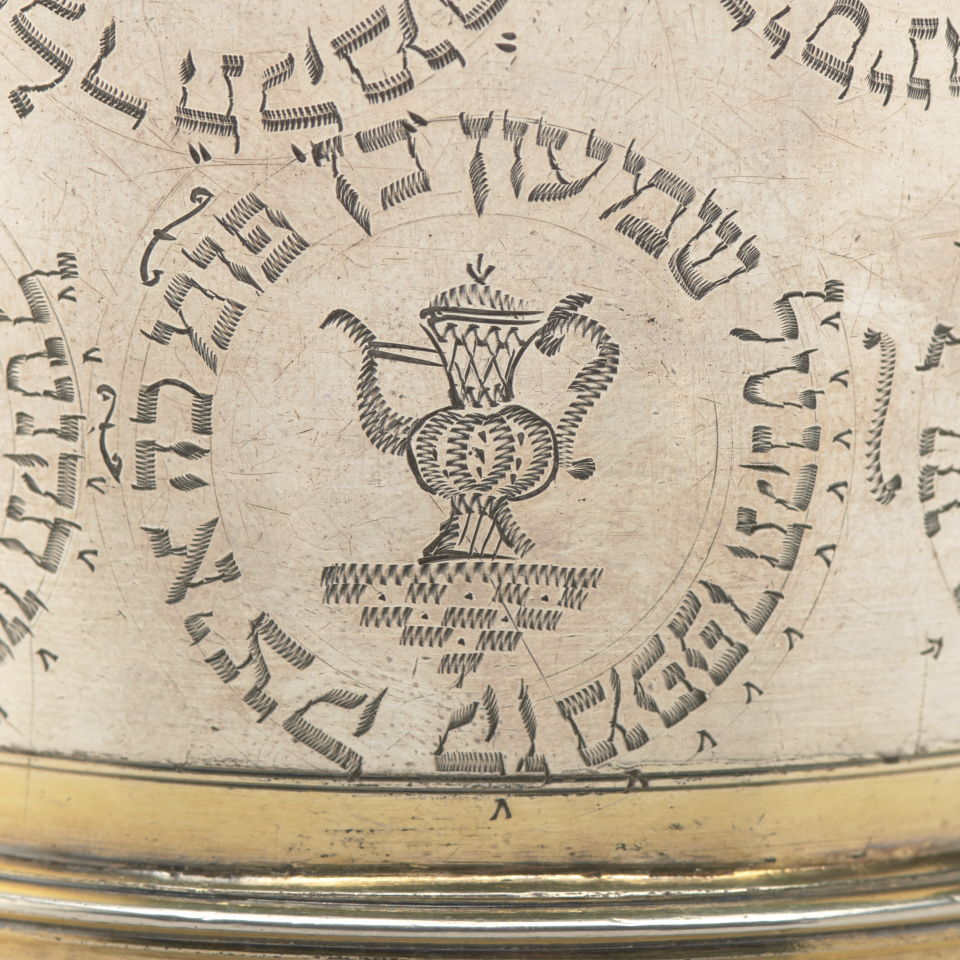
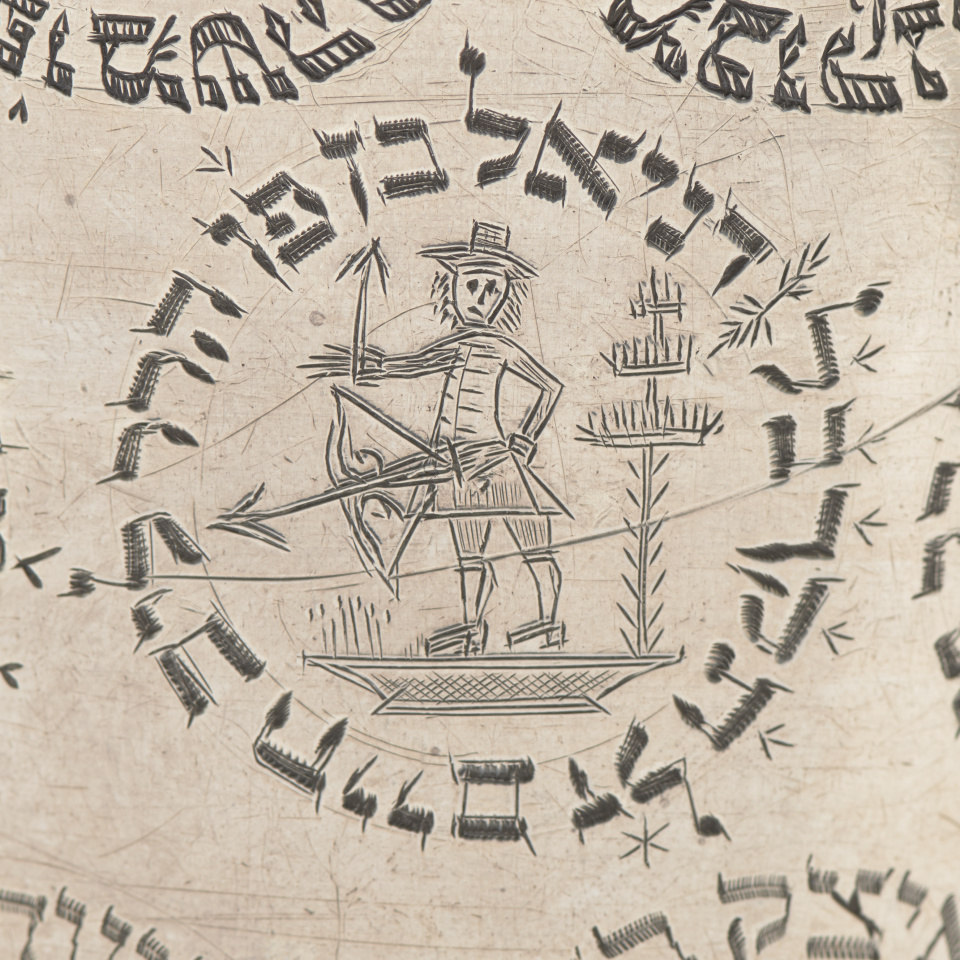
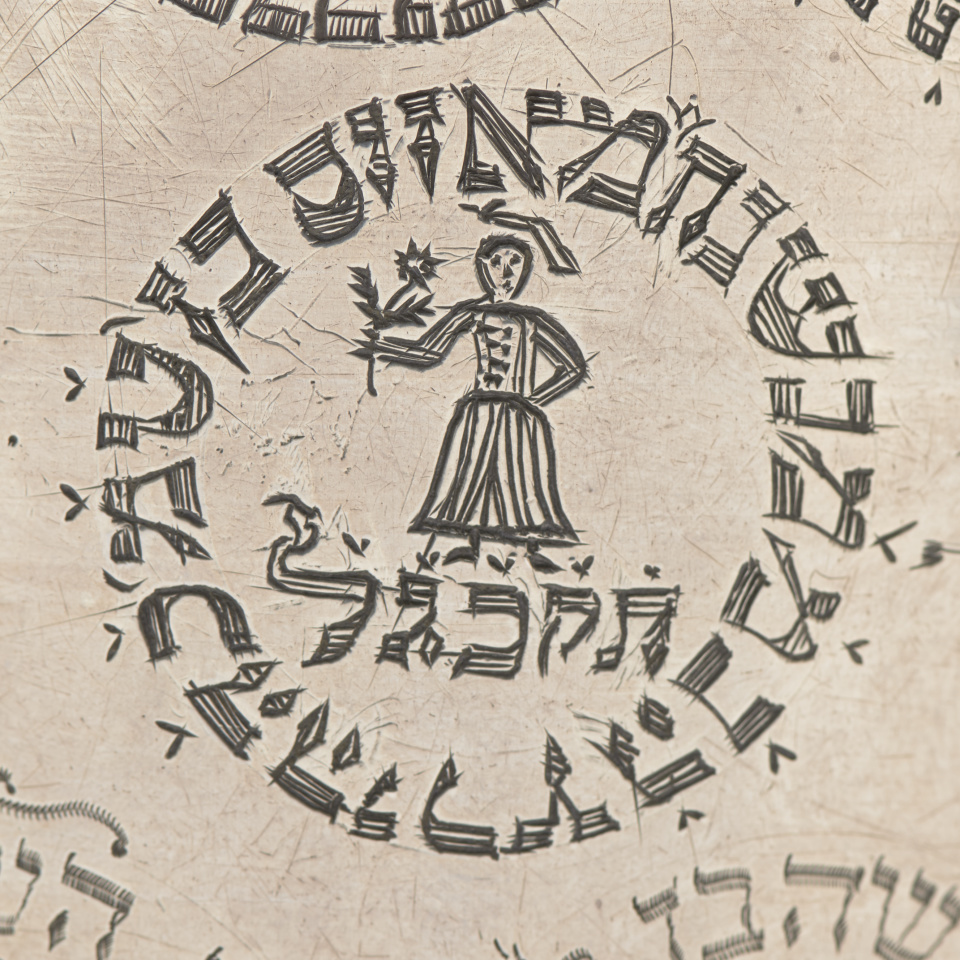
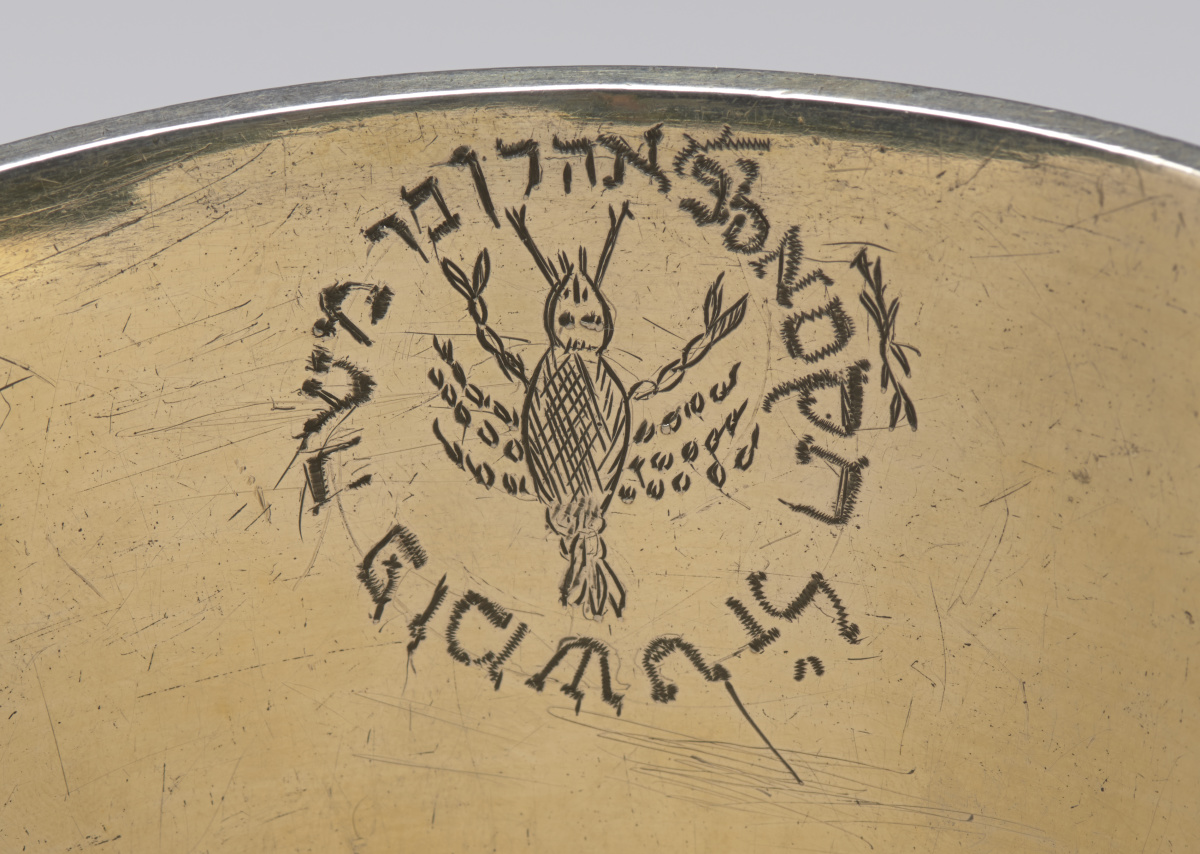
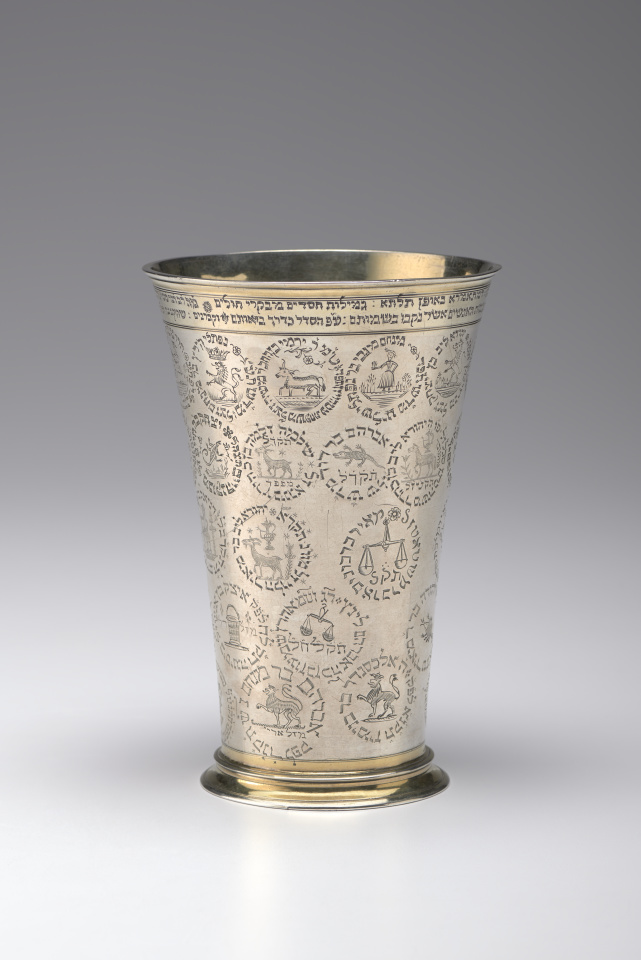
This early 18th-century silver beaker was used in the ceremonies of the Hevra Kadisha (or “Holy Society”) of the Jewish community of Darmstadt in western Germany. Among many European Jewish communities, volunteer associations known as hevra kadishas evolved to prepare the bodies of the deceased and oversee burial in accordance with Jewish law and custom. Traditionally, members of the hevra kadisha would hold an annual festive banquet at which wine was drunk from ceremonial cups like this one. Though simple in form, the whole surface is engraved with the names and personal emblems of the members of Darmstadt’s hevra kadisha, from the first decades of the 1700s until more than 100 years afterward. Many of the emblems are signs of the zodiac.
The beaker is both a masterpiece of fine silversmithing and a rare artifact of German Jewish history. It is also a fortunate survivor. After the disbanding of the hevra kadisha in the 1800s, the beaker descended in the family of a rabbi of Darmstadt. In November 1938, during the Anti-Semitic terror known as Kristallnacht (“Night of Broken Glass”), the Nazis torched Darmstadt’s synagogue. Fortunately the rabbi and his family escaped, taking this beaker with them into exile in the United States.