Photographer Rob Amberg has spent more than 20 years photographing rural life in western North Carolina. His images show how changes in farming, technology, and local communities have affected the people who live and work there. Amberg is best known for his documentary photographs. Many of his images show how life on small family farms in the Southern Appalachian Mountains has changed.
When I photograph, I often think, if only common ground can be found, if I can establish a trust with the subject of my picture, then perhaps that relationship can be communicated to a viewer. And if it can, then maybe that viewer will be challenged in a long-held belief, or come away with some fresh understanding of their own world. But mostly I hope the photographs will prompt openness and encourage people to be receptive to the shared experience of being human.
Rob Amberg (from his artist statement)
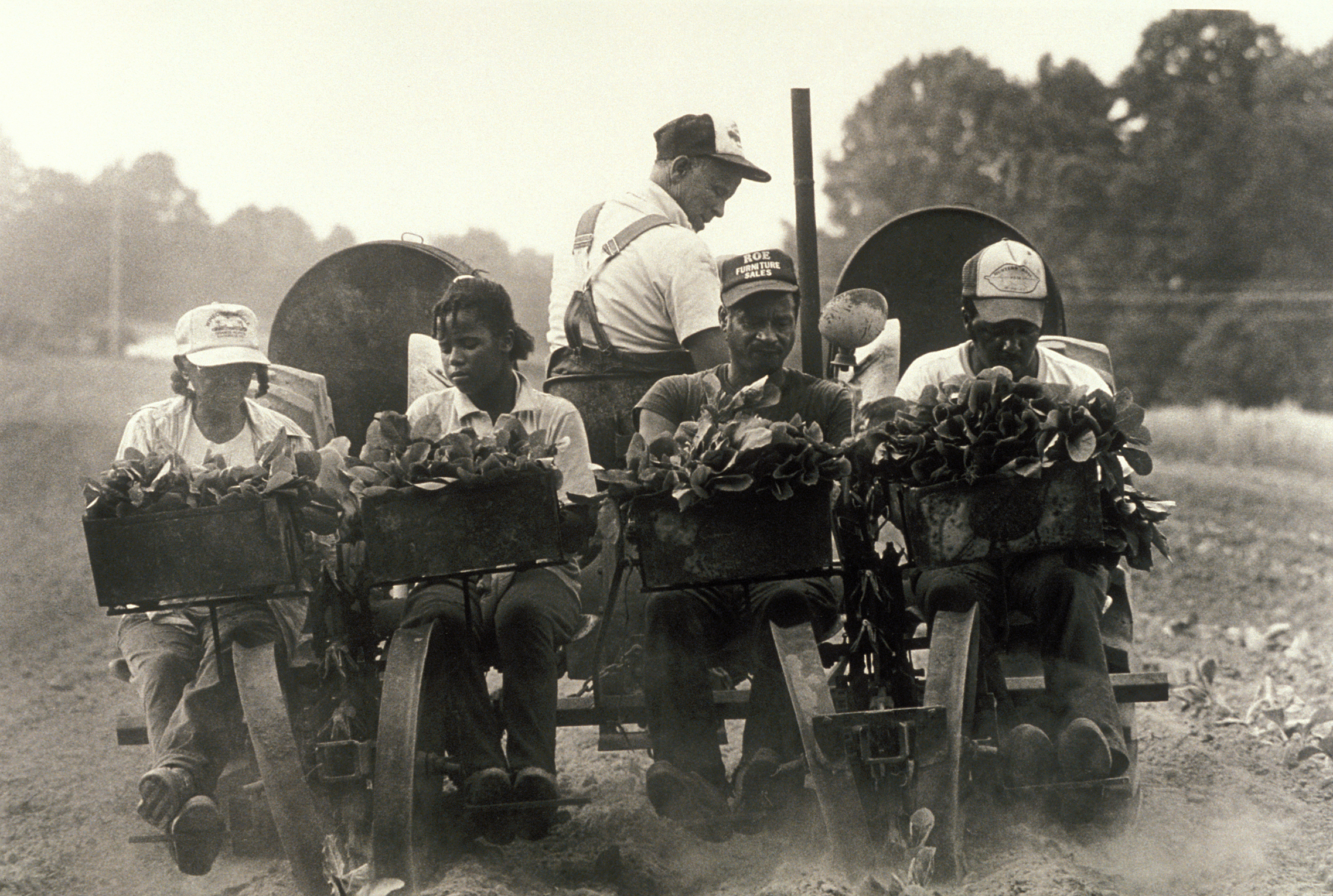
This photograph shows a family planting tobacco seedlings in a field. Four of the workers ride backward on a machine called a tobacco setter, or tobacco transplanter. Each worker holds a basket of young plants. As a tractor pulls the machine down the rows, the workers quickly place a plant into each hole. A small amount of water is added to help each plant take root. The tobacco setter replaced older methods that relied on mules and hand labor. The machine made planting faster, but successful planting still depended on people working together and using their skills.
This photograph is one of six works in the NCMA collection from Amberg’s project The Vanishing Culture of Agriculture. The series records the traditions of small farms in the South and helps preserve their stories. Together these photographs offer a lasting record of an important part of North Carolina’s history.