For centuries Mono Pass was an important trade route across the Sierra Nevada Mountains. The mountain pass was named for the Mono people, the Native American tribe that originally inhabited the region. Along this trail the Mono traded food, basket-making materials, and obsidian (volcanic glass) with other nearby tribes. Native Americans used obsidian to make hunting tools like arrowheads, knives, and spearheads.
White settlers began arriving in the region in the mid 1800s. The Indigenous peoples were forced by militias to leave their homeland. Mono Pass was then used by miners in search of gold and silver.
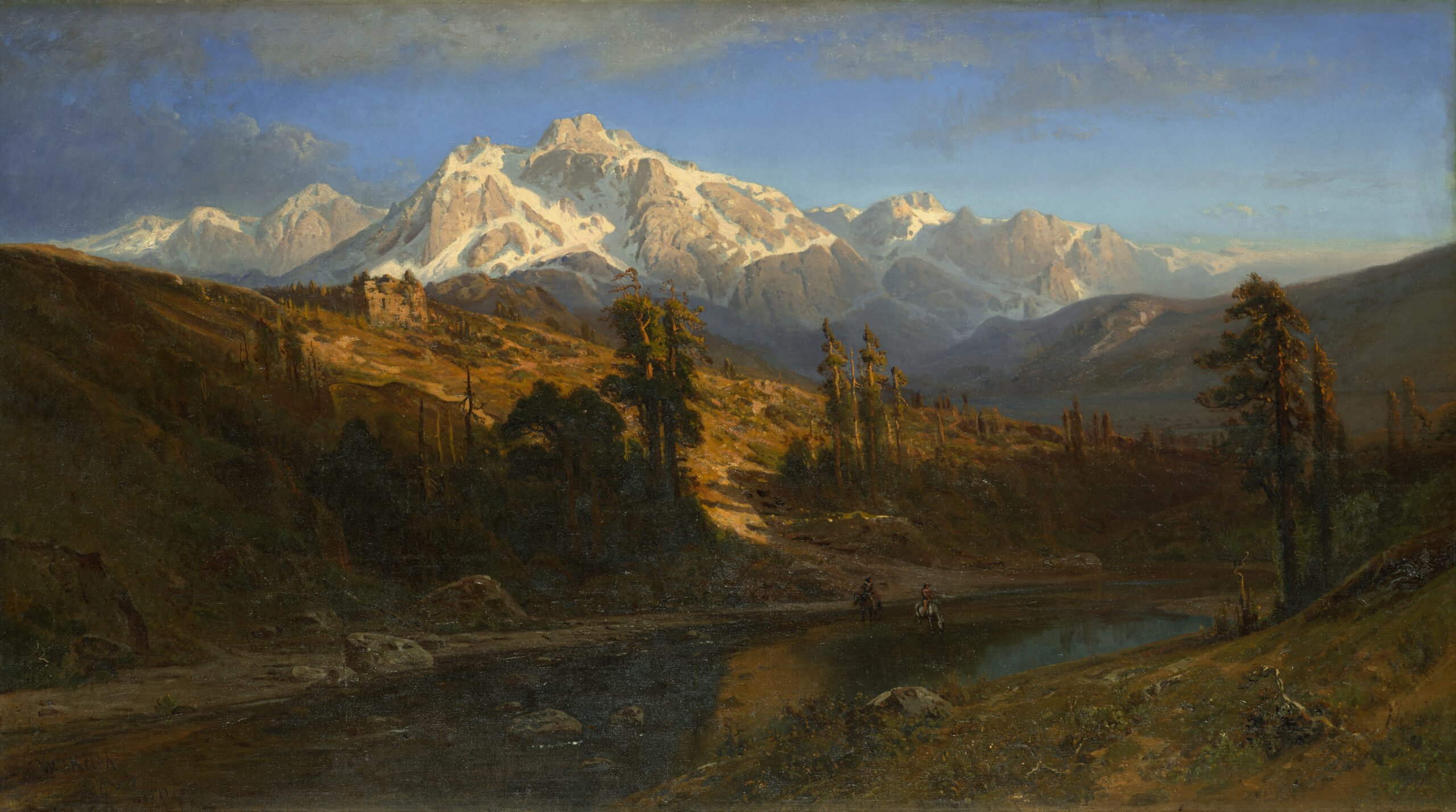
In 1875 William Keith went on a camping trip in the California wilderness with his friend John Muir. Together they traveled along Mono Pass, just outside present-day Yosemite. The two men were both Scottish immigrants who loved nature. Muir is considered to be America’s first environmentalist. Keith was a wood engraver and painter. He is best known for his California landscape paintings. In his early works, he tried to accurately reproduce what he saw in nature. His painting of Mono Pass portrays it as a rugged wilderness.
Today Mono Pass is a popular hiking trail. Every year the descendants of Indigenous peoples gather for a five-day hike. This annual event celebrates and honors their ancestors’ journeys.