Thomas Cole was a 19th-century American painter. He is best known for painting landscapes of the Hudson River Valley, including the Catskill Mountains, in New York State. Cole’s landscape paintings launched his career and inspired a generation of artists.
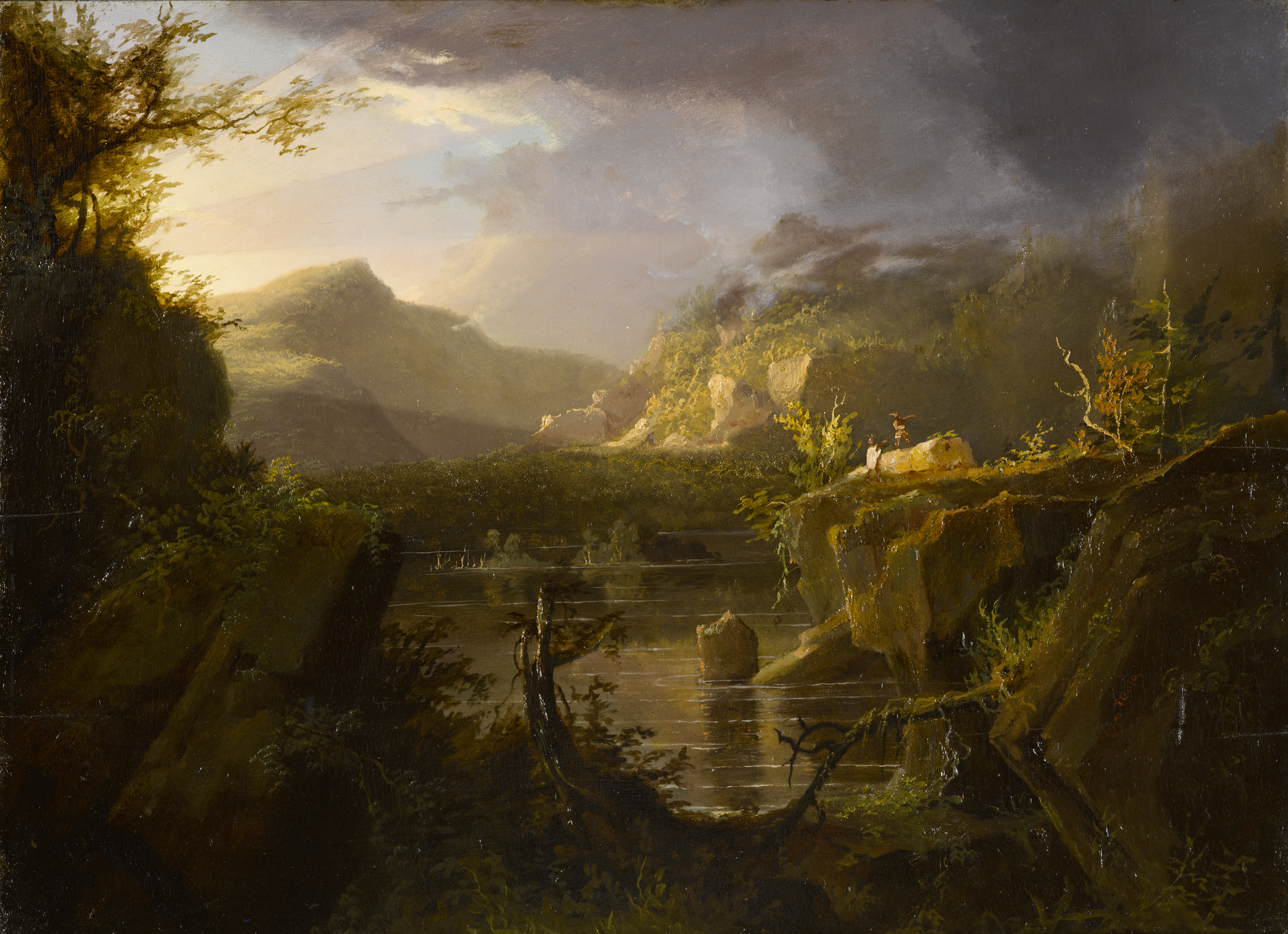
Around 1825, the year before he created this painting, Cole founded the Hudson River School. It was not an actual school. It was an art movement characterized by romantic, realistic-looking landscape paintings that depict the power and beauty of nature in the Hudson River Valley. Expressive brushstrokes and dramatic colors and lighting are key techniques used in romantic paintings. The Hudson River School used landscapes to communicate symbolic and allegorical meaning. Allegorical art and stories use symbols to represent an abstract idea or moral.
None know how often the hand of God is seen in a wilderness but them that rove it for a man’s life.
Thomas Cole
Cole created Romantic Landscape early in his career as an artist. The painting is based on studies he made in the Catskill Mountains. It presents an idealized view of nature that is portrayed as better or more perfect than it actually is.
Over all, rocks, wood, and water, brooded the spirit of repose, and the silent energy of nature stirred the soul to its inmost depths.
Thomas Cole
The effects of industrialization on the environment concerned Cole. As an early environmentalist, he advocated for wilderness preservation. He is considered America’s first environmentalist artist. Many of his paintings serve as visual warnings about unchecked land development.
Today unchecked land development is called urban sprawl. This term refers to the rapid expansion of cities into surrounding areas without sufficient planning and regulation. This uncontrolled growth leads to negative consequences, including increased poverty and the loss of agricultural and natural lands.