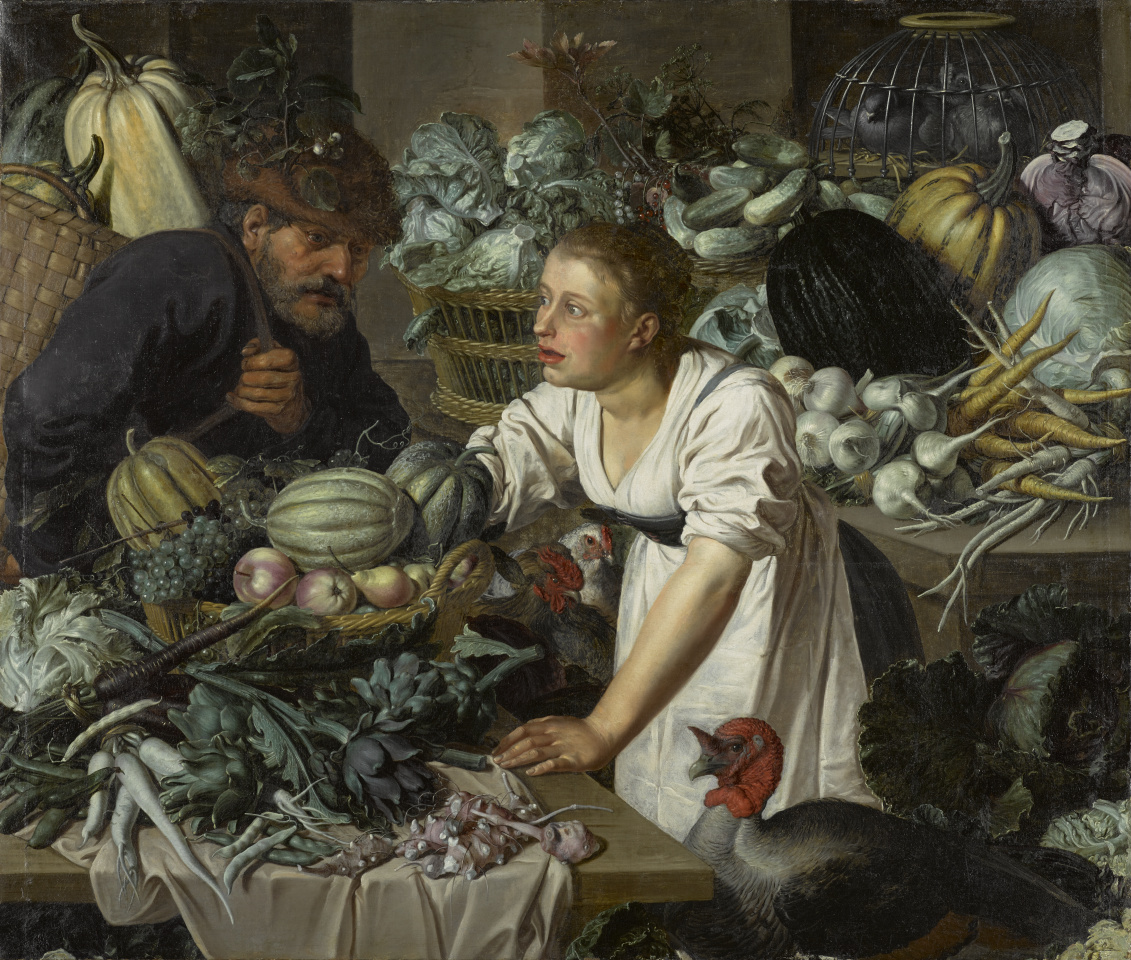
Naturaleza muerta con dos figuras muestra una cornucopia de productos y aves de corral vivas en un puesto de mercado. Las judías verdes, la calabaza, las calabazas y el símbolo más destacado del Día de Acción de Gracias moderno, el pavo, eran originarios de América. Aparecen en este cuadro holandés porque, al igual que muchos otros productos como la pimienta, el azúcar y el tabaco, fueron introducidos en Europa Occidental por los colonizadores y exploradores que regresaban a casa. Tanto la riqueza que se muestra aquí como los artículos específicos que se muestran no podrían haber existido sin el colonialismo holandés.
Las dos figuras, una mujer joven y un anciano con barba, están inmersas en los productos. La mujer lleva un largo delantal con las mangas remangadas, lo que sugiere que está acostumbrada al trabajo duro. El viejo agricultor que la acompaña muestra una expresión ligeramente alarmada mientras lleva una cesta llena de calabazas y zapallos. Las figuras se ven empequeñecidas por la abundancia de productos que llenan el espacio del cuadro a su alrededor. Las mesas parecen inclinarse hacia abajo, y esta perspectiva sesgada, junto con el apiñamiento extremo del cuadro en el primer plano, tira de tradiciones artísticas del siglo anterior.