Artist Joseph Cornell is known for his shadow boxes. They contain imaginary worlds made from everyday objects. He collected small items to use in his dreamlike shadow boxes. These items were things he found in places like libraries, museums, and antique stores. Cornell was a self-taught artist who never attended art school. He lived with his family and spent his life caring for his mother and disabled younger brother. He was isolated and never traveled outside New York. His artwork was a way for him to escape into different worlds.
Cornell’s shadow boxes were inspired by surrealism, a 20th-century art movement. Surrealist artists created wildly imaginative worlds in their artwork. They often placed random objects next to each other, to create art that did not resemble real life.
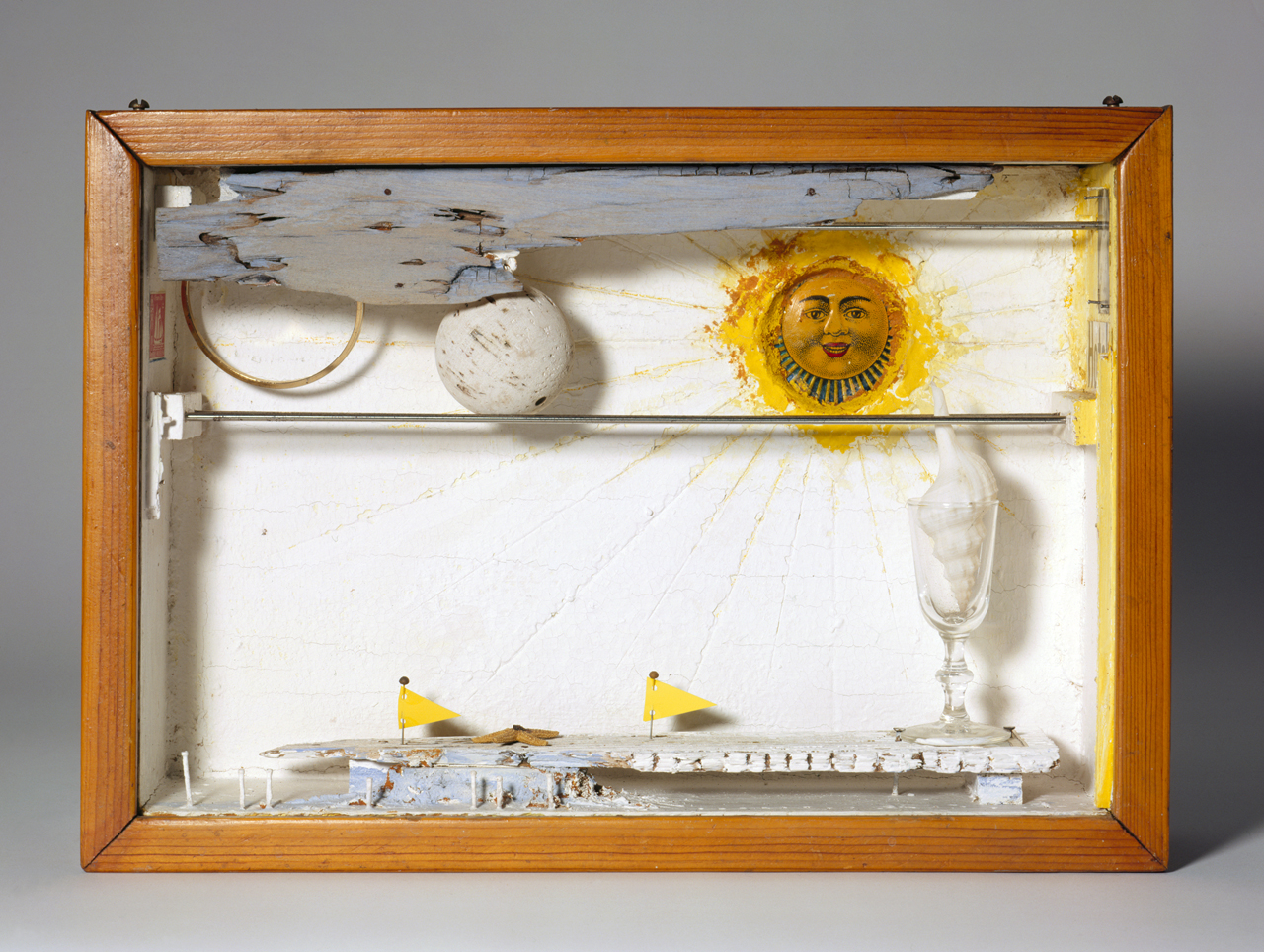
Cornell dedicated Suzy’s Sun (For Judy Tyler) to an actress who fascinated him. Judy Tyler had just starred in a movie with Elvis Presley when she was killed in a car accident. Cornell often dedicated his art to famous actresses or used their photos in his creations. The name “Suzy” in the title most likely refers to Suzanne Miller, who was Cornell’s assistant. She was featured in one of Cornell’s films and several of his other works.
The objects Cornell used in this assemblage create an unusual ocean scene. His imagery represents the themes of time and memory. The driftwood and the seashell are reminders of the constant flow of the ocean. The smiling sun remains in the background, despite the passing of time.
tags: reuse, symbolism, narrative, nature, communication, meaning, order, part/whole, place, landscape