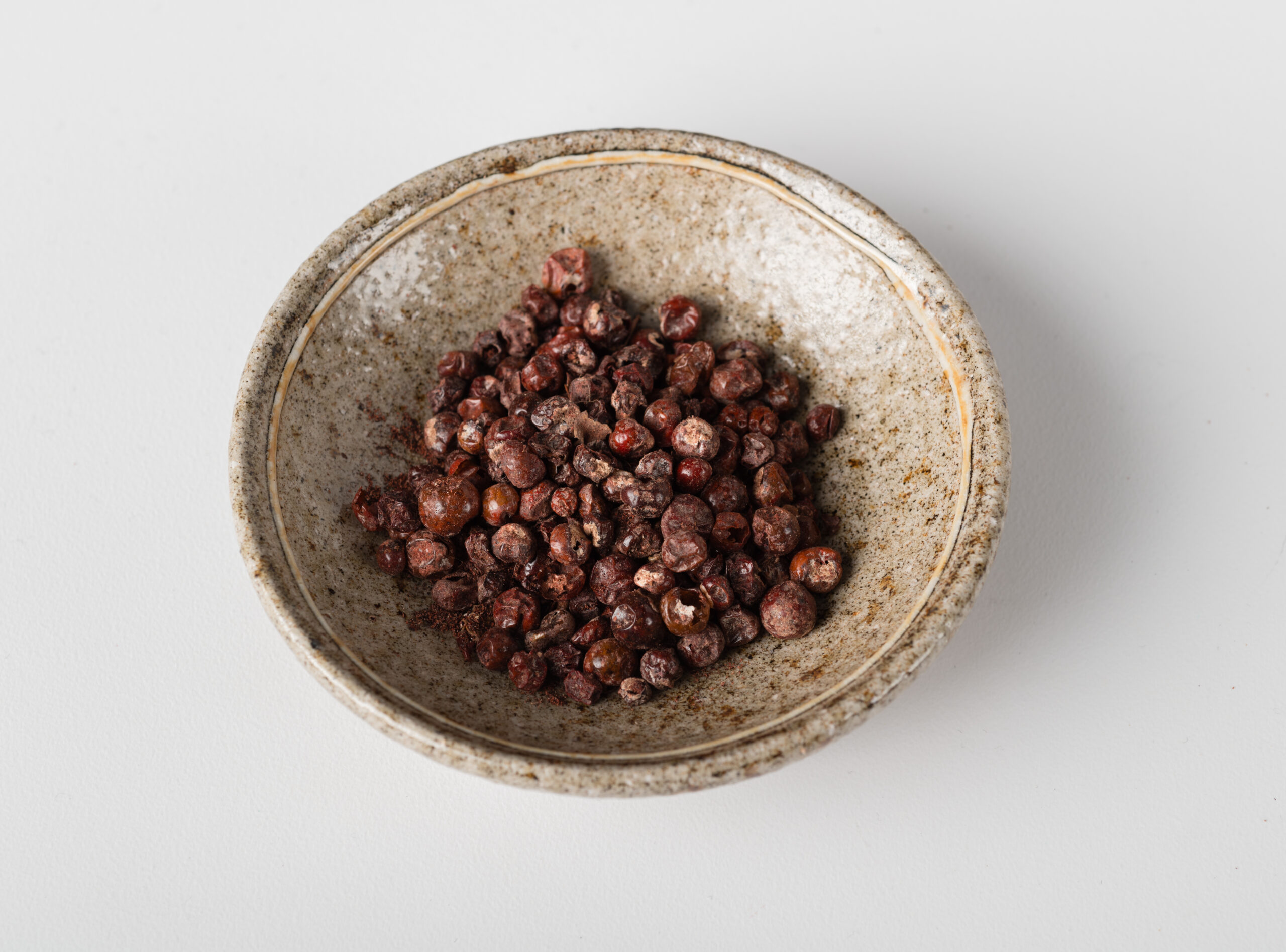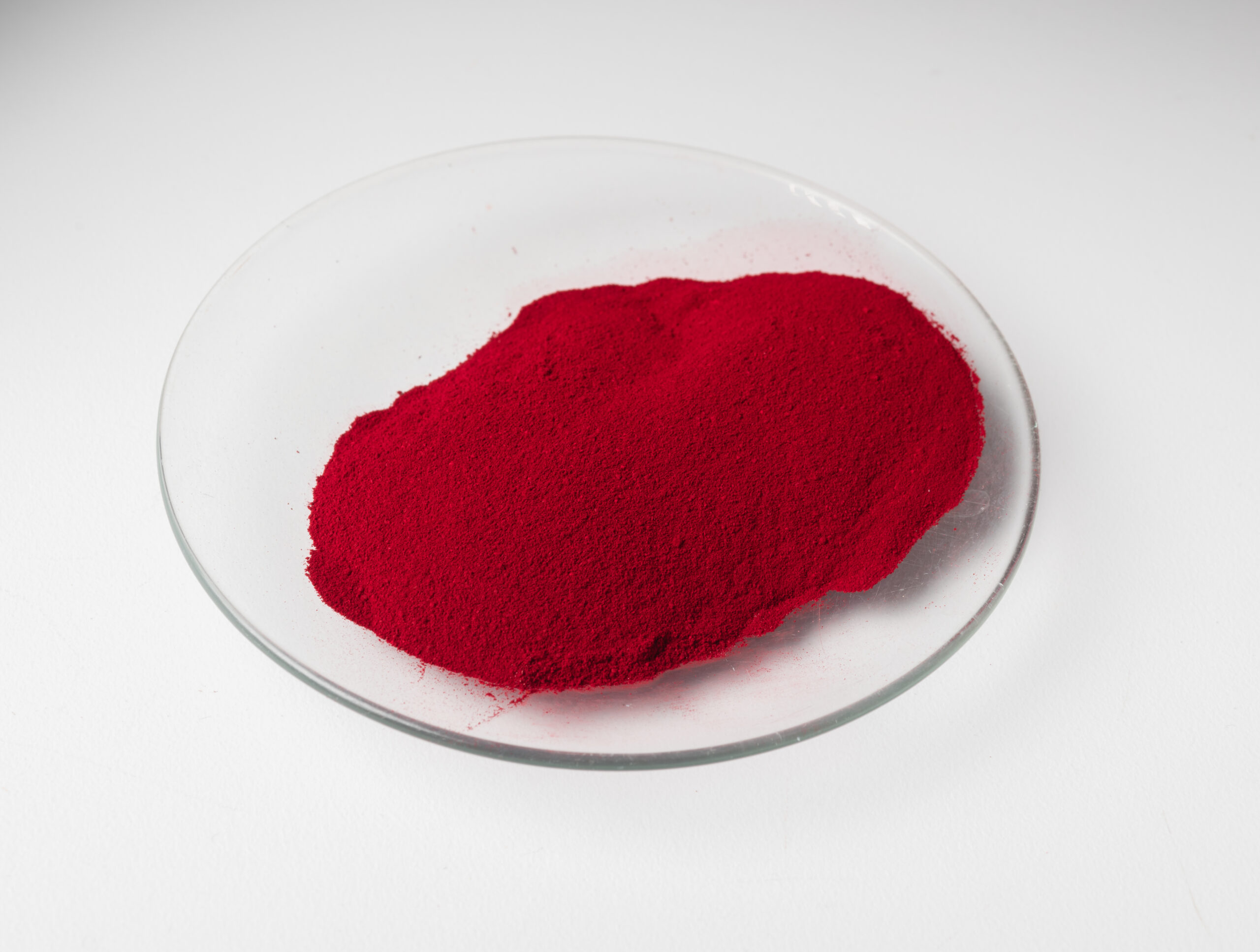



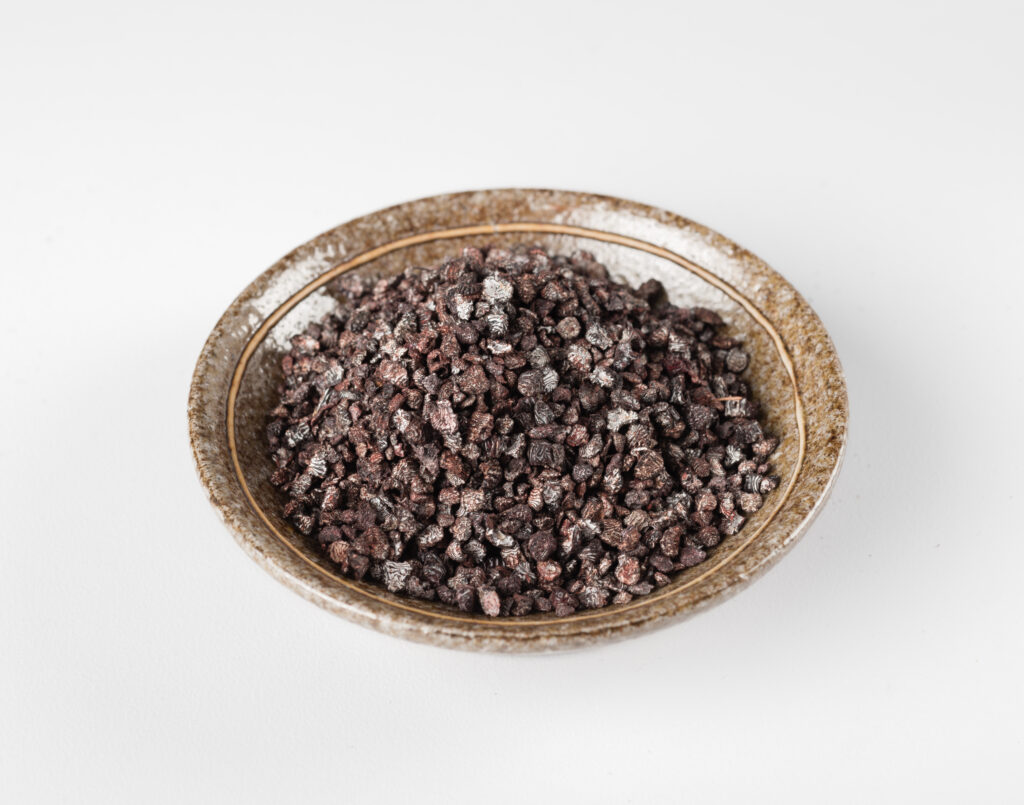
Dates of Use: Before 200 BCE–today
Source: Natural organic dye from the Dactylopius coccus insect
Chemical Name: Carminic acid
Formula: C22H20O13
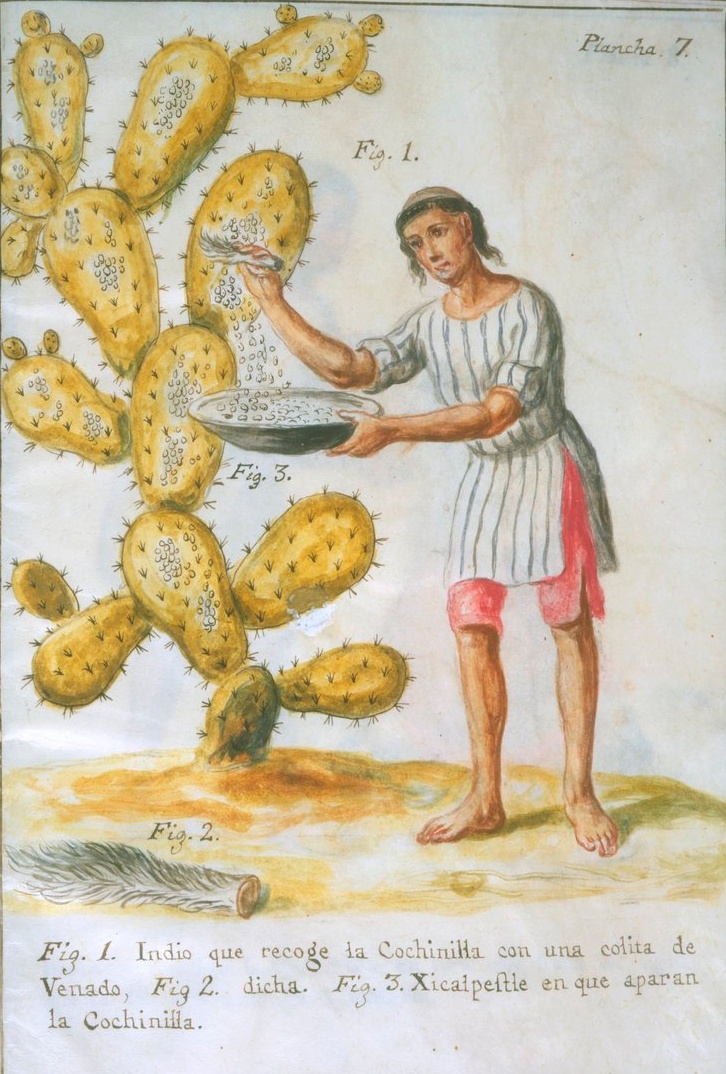
- Cochineal dye comes from the cochineal insect. These insects are similar to beetles, and they live on certain species of cactus.
- Cochineal dye resists fading better than other natural dyes. It will still fade over time from light exposure.
- Cochineal, like all dyes, can be made into paint by dyeing a colorless particle (such as chalk or alum). A pigment made from a dye is called a “lake.”
Cochineal and Indigenous Americans
Cochineal dye was first used by Indigenous Americans over 2,000 years ago. Cochineal insects are native to South America and parts of North America. Early Maya people developed ways of protecting the delicate insects and farming them to improve the red dye produced. In the Aztec language Nahuatl, the cochineal insects are called nocheztli, meaning “prickly pear cactus blood.” Cochineal was used to dye wool, furs, and feathers. It was also used to create manuscripts and murals. Cochineal red was used to symbolize the gods, the sun, and blood. It was reserved for important ceremonial use and worn by rulers. Cochineal were discovered, developed, and highly prized by Indigenous Americans at least 1,500 years before the arrival of Spanish colonizers.

The Spanish Empire and Cochineal
After colonizing parts of the Americas, the Spanish Empire exported natural resources. The Spanish started marketing cochineal globally in the 1500s. For many years cochineal dye was expensive to purchase. It was an export from the Americas that was more valuable per weight than sugar. The dye was a major source of income for the Spanish Crown. King Philip III of Spain gave barrels of cochineal dye as gifts to foreign dignitaries and monarchies. In Europe the Spanish crown had a monopoly on cochineal until 1820, when the French learned how to cultivate the insects and produce the red dye.
The Rise and Fall and Rise Again of Cochineal
After cochineal was introduced to the world by the Spanish, kermes fell out of use. Kermes and cochineal created similar colors, but cochineal dye was about ten times stronger than kermes dye. This made it more economical to use. In the same way that cochineal displaced the use of kermes, a new red dye eventually replaced cochineal. In 1868 a synthetic red dye called alizarin was invented. This invention caused a decrease in the use of cochineal dye. The use of cochineal surged again about 50 years ago. It was prompted by concerns over the toxicity of modern materials, particularly artificial dyes. Cochineal is now widely used as a non-toxic alternative in red cosmetics and food coloring.