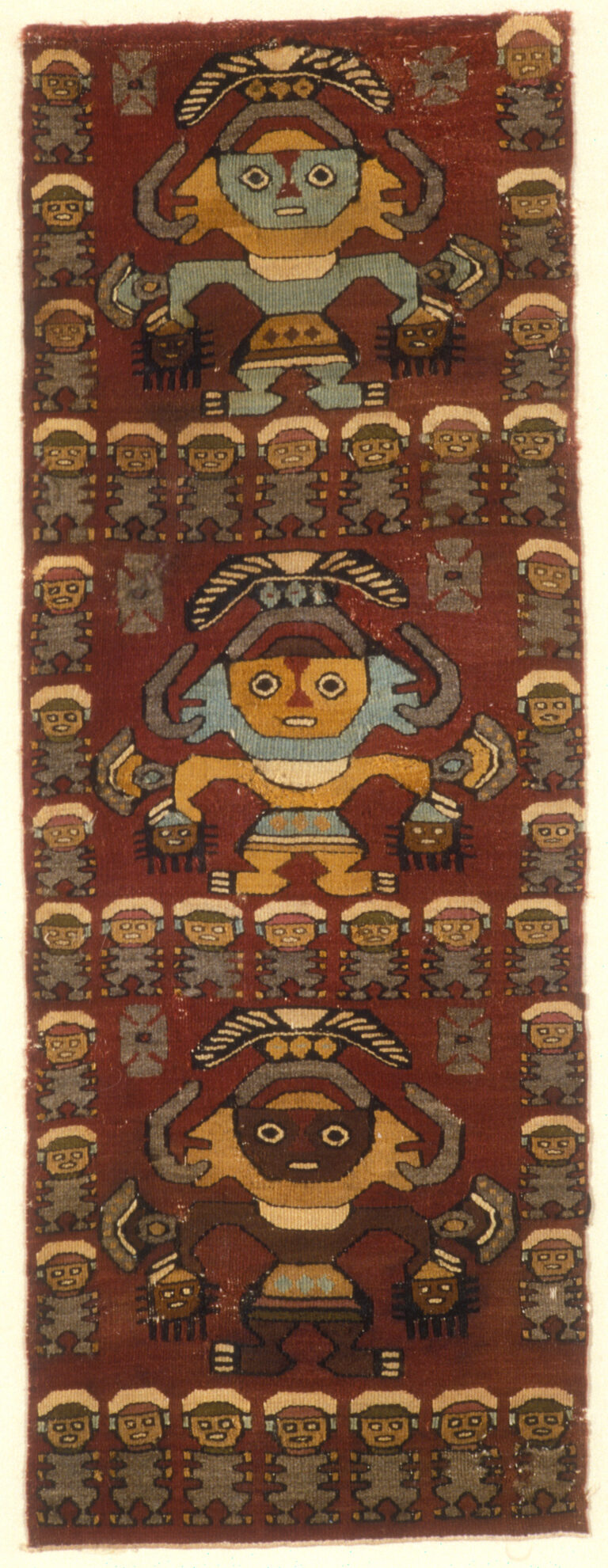
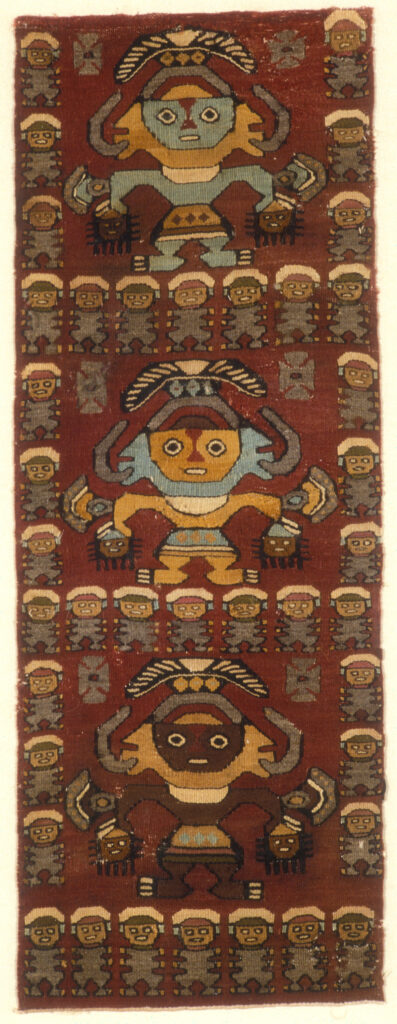
This panel comes from the Chimú society of ancient Peru. They maintained the largest and most important political system in Peru before the Inca.
About the Art
This panel is a tapestry, a piece of thick fabric with images woven into it. Tapestry was considered a high-prestige cloth in ancient Peru as elsewhere in the world. This panel has been cut from a larger garment, perhaps the tie end of a loincloth.
Look Closely
Chimú weavers created striking graphic designs through the repetition of simple, abstract forms in vivid color combinations. What colors were used in this work? What patterns do you see repeated?
What do you think the designs were meant for and what might they represent?
Discuss
Due to a lack of archaeological information, it is not clear what this panel was used for. It might have been worn, hung on a wall, or buried with the dead. Look at the three large figures in this panel. They are wearing a crescent-shaped headdress that indicates supernatural status. These kinds of headdresses have been found in the tombs of elite Peruvian figures.
What do you notice about the figures surrounding the warriors?
What hypotheses might you make about the meaning and purpose of this panel?
Reflejar
Many traditional textiles convey important social, political, and religious messages through the material and images as well as the purpose of use. Think about how and when we use clothing to elevate the importance of present-day social, political, or religious events.
What traditional clothes do people in your culture and/or community wear?
Describe an event you have been a part of or observed where clothing was used to express social, political, or religious identity.
Más información
Visit the “Learn More” sidebar to find more information about the work of art and artist and find other works of art that relate to the subject matter, media, and techniques used by the artist.